By Aeruxo — Licensed flight dispatcher (study guide) | 15+ Years in Airline Operations
The ACARS message came in at 22:47 local time: “REQUEST DIVERSION CLK. PAX MEDICAL EMERGENCY. ADVISE.”
I was three hours into a night shift. The flight was an Incheon-to-Manila service, about 90 minutes from landing. A passenger had collapsed in the aisle — suspected cardiac arrest. The cabin crew was performing CPR. The Captain wanted to divert to Clark International Airport, the nearest suitable field in the Philippines. I had about four minutes to make it happen.
That is what a flight diversion looks like from the inside. Not the sanitized version from the airline’s press release. The real thing — urgent, compressed, high-stakes, and entirely dependent on decisions made by people you will never meet.
In over 15 years as a flight dispatcher at a Korean low-cost carrier, I have managed every type of diversion imaginable: weather, mechanical failures, medical emergencies, volcanic ash, typhoons, and yes, the occasional unruly passenger. This article is the most complete account I can give of what actually happens when your flight diverts — from the moment the decision is made to the moment you finally reach your destination.
Key Takeaways
- A flight diversion is not an emergency landing — it is a controlled, pre-planned decision to land at an alternate airport instead of the original destination.
- Every flight plan already includes diversion airports, selected by the flight dispatcher before departure. When a diversion happens, we are executing a plan that already exists.
- The dispatcher and pilot make the flight diversion decision together, often in under 5 minutes, while simultaneously coordinating with ATC, the destination airport, and ground teams.
- Medical emergencies are the most common non-weather diversion reason on our Southeast Asia routes — and they require the fastest decision-making.
- At a Korean LCC, a diversion at an outstation (Manila, Bangkok, Denpasar) creates a uniquely complex recovery challenge because we have no crew base, no spare aircraft, and limited ground handling at most diversion airports.
This article is based on real operational experience in an airline Operations Control Center (OCC), where flight diversions are coordinated in real time with flight crews and ground operations.
1. First Things First: A Diversion Is Not a Crash Landing
I need to clear up the biggest misconception right away. When passengers hear “we are diverting to another airport,” many immediately assume the worst — something is catastrophically wrong with the aircraft and they are about to make an emergency crash landing.
That is almost never what is happening.
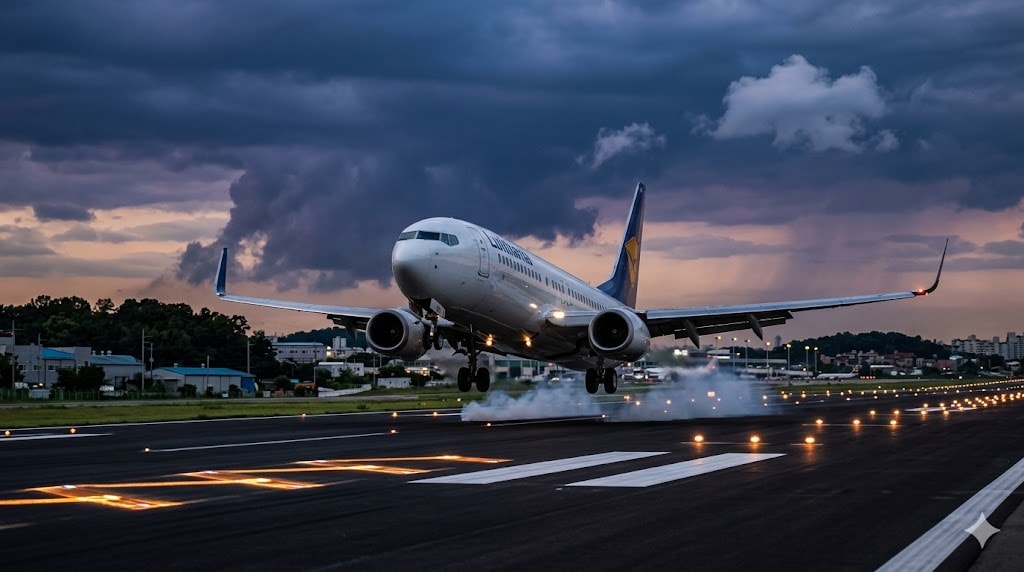
A flight diversion is a controlled, deliberate decision to land at a different airport than originally planned. The aircraft is flying normally. The pilots are in full control. The landing will be a standard approach and landing, no different from arriving at your intended destination — just at a different airport.
The reasons for diverting vary widely, and most of them have nothing to do with the aircraft being in danger. Weather closing the destination airport, a passenger medical emergency, a minor mechanical issue that can be safely addressed on the ground, ATC restrictions — these are all routine operational scenarios that dispatchers and pilots train for extensively.
In my experience, roughly 1 in every 3,000-5,000 flights at our airline results in a diversion. It is uncommon enough that most passengers will never experience one, but common enough that every flight dispatcher handles several per year. For me personally, I manage roughly 10-15 diversions annually across my desk. Each one is different, but the process follows a well-established framework.
For the regulatory framework behind these decisions, SKYbrary’s flight diversion reference provides the ICAO standards that all dispatchers operate under.
2. The Decision: How a Diversion Gets Called
A flight diversion decision can originate from three sources: the flight crew, the flight dispatcher, or ATC. Understanding how a flight diversion gets called is essential to understanding why it happens at all. In practice, it is usually a collaborative decision between the crew and the dispatcher, with ATC facilitating the execution.

Here is how the process typically unfolds at my airline:
Scenario: Weather diversion. I am monitoring a Gimhae (Busan) to Tokyo Narita flight. The destination weather has been deteriorating — the TAF showed improvement, but the actual METAR is now reporting 600 meters visibility in fog, below our approach minimums. The aircraft is 45 minutes from landing. I send an ACARS message to the crew: “NRT weather below mins. Trend not improving. Recommend diversion HND [Haneda]. Confirm fuel status.” The Captain replies: “Concur HND. Fuel sufficient. Requesting ATC clearance.” I coordinate with our Tokyo station to arrange ground handling at Haneda, notify the OCC duty manager, and update the flight tracking system. The entire decision takes about 8 minutes from my first ACARS message to ATC clearance.
Scenario: Medical emergency. This one moves faster. The cabin crew reports a passenger with chest pain and difficulty breathing. The Captain immediately contacts me: “Possible cardiac event. Requesting nearest suitable airport.” I already know the aircraft’s position — they are over the South China Sea, roughly equidistant between Da Nang and Manila. I check weather at both. Both are VMC (Visual Meteorological Conditions). Da Nang is slightly closer and has a hospital within 15 minutes of the airport. I respond: “Recommend DAD [Da Nang]. Weather VMC. Medical facilities confirmed. Coordinate with ATC for direct routing.” The Captain initiates the diversion. Total decision time: under 4 minutes.
Scenario: Mechanical issue. During cruise, the crew receives a warning indication for one of the hydraulic systems. The aircraft is safe to continue flying, but the flight plan I built assumed all systems operational. With reduced hydraulic capability, certain approach types may be restricted, and the landing distance requirement increases. I calculate whether the destination runway is still suitable. If the numbers do not work, we divert to an airport with a longer runway. These decisions are more methodical — we typically have 20-30 minutes to analyze and decide.
3. The Five Most Common Reasons I Divert Flights
Based on my 15 years of experience on Japan and Southeast Asia routes, here are the flight diversion triggers I encounter most frequently, ranked by how often they occur.
3.1 Weather at Destination
This is the single most common reason for diversions on our network. And it is overwhelmingly dominated by two patterns: winter fog and snow at Japanese airports, and monsoon thunderstorms at Southeast Asian airports.
Japanese airports — particularly New Chitose (Sapporo), Narita, and regional airports in Hokkaido — can go below minimums rapidly in winter. I have had situations where the METAR reported 2,000 meters visibility, and by the time the aircraft was on approach, visibility had dropped to 400 meters in a sudden snow squall. The crew executes a missed approach. They try again. Another missed approach. Now fuel is getting critical. I divert them to Haneda or Chubu, where conditions are better.
Southeast Asian airports face a different challenge. During monsoon season, airports like Tan Son Nhat (Ho Chi Minh City), Ninoy Aquino (Manila), and Suvarnabhumi (Bangkok) can experience intense but short-lived thunderstorms that temporarily shut down approaches. The frustrating part is that these storms often pass within 30-45 minutes. The question becomes: do we have enough fuel to hold and wait for the weather to clear, or do we need to divert now? That calculation — fuel remaining versus estimated weather improvement — is one of the most consequential decisions I make. Get it right, and the passengers land at their intended destination after a 30-minute hold. Get it wrong, and you have either a diversion (costly but safe) or a fuel emergency (dangerous and unacceptable).
The IATA fuel management guidelines form the basis for how Korean carriers calculate diversion fuel requirements.
3.2 Medical Emergencies

Medical diversions are the ones that get your adrenaline going the fastest. Someone’s life may depend on how quickly we get the aircraft on the ground.
On our Southeast Asia routes — flights of 4-6 hours with 180+ passengers — medical events are not rare. Statistically, medical diversions account for roughly 15-20% of all our diversions. The most common scenarios I have dealt with include suspected heart attacks, severe allergic reactions, diabetic emergencies, and passengers losing consciousness.
When a medical flight diversion is called, my priorities shift instantly. I am no longer thinking about schedule, cost, or passenger inconvenience. I am thinking about one thing: getting this aircraft on the ground at an airport with adequate medical facilities as fast as possible.
The challenge on some Southeast Asian routes is that “the nearest airport” is not always the best airport for a medical emergency. A small regional airport might be geographically closer, but if it does not have a hospital nearby — or if the hospital does not have the capability to handle a cardiac event — then diverting there does not help the patient. I maintain a mental database of medical facility capabilities near our diversion airports. It is the kind of knowledge that no flight planning software provides but that can make a real difference when someone’s life is on the line.
3.3 Mechanical Issues
Mechanical diversions are less common than weather or medical diversions, but they are the ones that tend to generate the most anxiety among passengers. When the Captain announces “We have a minor technical issue and will be landing at an alternate airport as a precaution,” passengers understandably worry.
The reality is that most mechanical diversions are truly precautionary. A warning light that indicates a system is degraded but not failed. A pressurization anomaly that the crew wants inspected before continuing. An engine oil temperature reading that is trending higher than normal. These are not emergencies — they are the crew and the flight dispatcher making the conservative choice to address a potential issue on the ground rather than continuing to the destination and hoping it stays manageable.
I support that conservatism absolutely. In my previous article on flight delays, I wrote that maintenance delays are the one delay you should be grateful for. The same applies to mechanical diversions. That precautionary diversion might cost you a few hours of inconvenience, but it eliminates a risk that could become serious if ignored.
3.4 Typhoons and Volcanic Ash
These are the dramatic diversions — the ones that affect multiple flights simultaneously and turn the OCC into a war room. I covered these extensively in my article on turbulence and aviation safety, but from a diversion perspective, the key challenge is that typhoons and volcanic ash can force diversions to airports that were not part of the original flight plan.
During one particularly intense typhoon, I diverted an Incheon-to-Okinawa flight to Fukuoka and an Incheon-to-Taipei flight to Jeju. Neither Fukuoka nor Jeju was the planned alternate for those flights — the planned alternates had also been affected by the typhoon’s expanding wind field. When the pre-planned alternate becomes unavailable, the dispatcher has to rapidly identify, verify, and coordinate with a completely new diversion airport. That is when the job gets genuinely difficult.
3.5 Unruly Passengers
I will be honest: this category is frustrating. When a flight diverts because of a disruptive passenger, 179 people are inconvenienced because of 1 person’s behavior.
On our routes, alcohol-related incidents are the most common trigger. A passenger becomes aggressive, threatening, or refuses to comply with crew instructions. The Captain determines that the behavior poses a safety risk that cannot be managed until landing at the destination. We divert to the nearest suitable airport to have the passenger removed by local authorities.
From the OCC side, unruly passenger diversions are operationally straightforward but logistically frustrating. The diversion itself is routine. But the ground time at the diversion airport — waiting for police, filing reports, possibly offloading the passenger’s luggage from the cargo hold — can easily add 2-3 hours to the delay. And unlike a weather diversion, there is no operational benefit to the delay. It is pure disruption caused by one individual.
4. Inside the OCC: What Happens in the 10 Minutes After a Diversion Is Called
When I receive or initiate a flight diversion, the next 10 minutes are the most intense period of my workday. Here is the actual sequence of events, in real time:

Minutes 0-2: Confirm the diversion and verify fuel. I confirm the diversion airport with the crew. I verify that the aircraft has sufficient fuel to reach it with required reserves. If fuel is tight, this calculation takes priority over everything else. I also verify that the diversion airport is open — checking the latest METAR, NOTAMs, and runway status.
Minutes 2-4: Coordinate with ATC and the diversion airport. While the crew works with ATC for routing clearance, I contact the diversion airport’s ground handling agent (if we have one) or the airport authority directly. I need to arrange a gate or parking stand, ground power, stairs (if no jet bridge), and potentially customs/immigration if the diversion crosses international borders.
Minutes 4-6: Notify internal teams. I alert the OCC duty manager, the station operations team at both the original destination and the diversion airport, crew scheduling (because this diversion will affect the crew’s duty time and potentially their next flight), and the passenger services team (who need to start arranging rebooking, hotels, and meals).
Minutes 6-8: Plan the recovery. Even before the aircraft has landed at the diversion airport, I am already thinking about recovery. Can this aircraft continue to the original destination after the issue is resolved? If so, how long will it take? Will the crew still be legal to fly? Do I need to send a replacement crew? Do I need to arrange bus transportation for passengers instead? Each answer spawns more questions and more coordination.
Minutes 8-10: Document and communicate. I update the airline’s operations management system with the diversion details, send notifications to downstream stations that will be affected, and begin adjusting the rest of my flight schedule for the cascading effects of this diversion.
All of this happens while I am still monitoring my other 10-15 active flights. The diversion is urgent, but the other flights do not stop needing attention. This is where the ability to multitask under pressure — developed over years of doing exactly this — becomes essential.
5. The Hardest Part: Recovery at an Outstation
For a full-service carrier with global operations, a flight diversion to Bangkok or Manila is manageable — they likely have staff, spare crews, and ground handling agreements at those airports. For a Korean LCC, a diversion to an outstation can be a logistical nightmare.

Here is why. When we divert to an airport that is not our regular destination, we often face:
No ground handling presence. At our regular destinations (Osaka, Bangkok, Manila, etc.), we have contracted ground handling agents who know our procedures. At a diversion airport — say, U-Tapao in Thailand or Kagoshima in Japan — we may have no existing relationship. I have to call the airport authority, explain the situation, arrange ad-hoc handling services, negotiate fees, and coordinate all of this while the aircraft is inbound. I have done this in the middle of the night, calling airport offices that barely have anyone on duty.
No crew base. Our crews are based in Incheon, with some in Gimhae. If the crew times out at a flight diversion airport in the Philippines, I cannot simply call a reserve crew in Manila — we do not have one. I have two options: rest the crew at the diversion airport and wait until they are legal to fly again (minimum 10-12 hours), or send a positioning crew from Incheon on the next available flight. Both options mean the aircraft sits idle for hours, sometimes overnight.
Customs and immigration complications. If the flight diverts to an airport in a different country than the planned destination, passengers may need to clear immigration at the diversion airport, even if they are just transiting. At some airports, this process is smooth. At others — particularly smaller airports without dedicated international transit facilities — it can take hours and create enormous frustration for passengers who never intended to visit that country.
One diversion I handled particularly sticks with me. A flight from Incheon to Denpasar (Bali) diverted to Surabaya due to volcanic ash advisories around Ngurah Rai airport. Surabaya has international facilities, so customs and immigration were manageable. But it was midnight, and our ground handling arrangements in Surabaya were minimal. The passengers deplaned into a terminal with limited food options and no hotel arrangements. I spent the next three hours on the phone coordinating buses, hotels, and a recovery flight for the next morning. The passengers were understandably frustrated. But they were safe, and Bali airport reopened the next morning. The alternative — attempting to land at Denpasar through volcanic ash — was not an option any responsible dispatcher would consider.
6. What Passengers Should Know During a Diversion

Based on my years of managing flight diversions from the OCC side, here is what I wish every passenger knew:
Stay seated until the crew tells you otherwise. When the Captain announces a diversion, some passengers immediately jump up to grab their bags or crowd the aisle. This makes the situation more difficult for the crew, who need a clear cabin to manage the diversion safely. The aircraft is going to land. You are going to deplane. You will get your bags. Just not in the next 5 minutes.
The crew often knows as little as you do — at first. The initial announcement might be vague because the crew is still coordinating with the OCC and ATC. More information will come, but it takes time. The Captain’s priority during a flight diversion is flying the aircraft safely, not giving detailed passenger updates every 30 seconds.
Do not take out your frustration on the cabin crew. They did not cause the diversion. They cannot fix the weather, repair the aircraft, or cure a sick passenger. They are managing a stressful operational situation while simultaneously dealing with 180 people’s emotions. Be patient. Be kind. They are doing their best.
Keep your phone charged and your travel insurance details accessible. When you land at the diversion airport, you will need your phone for communication with the airline, rebooking, and potentially arranging your own accommodation if the airline’s arrangements are slow (which, at a small outstation at 2 AM, they often are). Travel insurance can cover meals, hotel, and alternative transportation costs that the airline may or may not reimburse depending on the diversion reason and applicable regulations.
Understand the airline’s obligations — and their limits. In Korea, airlines are generally required to provide meals, accommodation, and rebooking for diversions. However, the specifics depend on the cause. Weather diversions (outside the airline’s control) may receive fewer passenger care provisions than mechanical diversions (within the airline’s control). Know your rights, but also understand that at a small airport at midnight with 180 passengers suddenly arriving, the airline’s ability to instantly provide hotel rooms for everyone is genuinely limited. The logistics take time.
7. The Numbers: What a Diversion Actually Costs
Airlines hate flight diversions. They are expensive, operationally disruptive, and damage customer loyalty. Here is a rough breakdown of the costs involved in a single international diversion for a 737-800, based on my operational knowledge:
Landing and parking fees at the diversion airport: varies widely, but typically $2,000-$8,000 depending on the airport.
Ground handling charges (stairs, ground power, marshalling, towing): $3,000-$10,000, often higher at airports where we do not have contracted rates.
Additional fuel for the diversion routing plus the subsequent ferry or recovery flight: $5,000-$15,000 depending on the distance.
Passenger care costs (meals, hotel accommodation, ground transportation): $15,000-$50,000 depending on the number of passengers and the duration of the delay.
Crew costs (overtime, hotel, possible positioning of a replacement crew): $3,000-$10,000.
Revenue loss from cancelled or delayed subsequent flights on that aircraft’s rotation: potentially $20,000-$100,000+ depending on how many flights are affected.
A single diversion can easily cost a Korean LCC $50,000 to $200,000 when all direct and indirect costs are factored in. For an airline where the average ticket price might be $150, that is the revenue from 300 to 1,300 tickets. This is precisely why I never divert a flight without a legitimate safety or regulatory reason. But when that reason exists, cost is irrelevant. We divert.
8. Lessons from 15 Years of Diversions
If I could distill everything I have learned about diversions into a few principles, they would be these:
The best flight diversion is the one that never happens. Good flight planning — selecting the right alternate, carrying appropriate fuel, briefing the crew on contingencies — prevents many potential diversions before they start. When I load an extra 1,000 kg of fuel because I do not trust the destination forecast, and the flight ends up holding for 20 minutes before landing normally, that extra fuel just prevented a diversion. Nobody knows. Nobody thanks me. But I know.
Speed of decision matters more than perfection of decision. In a medical emergency, a fast diversion to a “good enough” airport is better than a slow diversion to the “perfect” airport. I have learned to make rapid decisions with incomplete information — something that only comes from experience and from having already thought through scenarios before they happen.
Communication is everything. The smoothest diversions I have managed were the ones where communication flowed seamlessly between the crew, the OCC, the ground handling team, and the passengers. The worst ones were when communication broke down — when the crew could not reach me, or when the ground handling at the diversion airport did not receive our messages, or when passengers were left without updates for too long.
Every diversion teaches you something. After every diversion, I do an informal review in my head. What went well? What could I have done faster? Was my alternate selection the best option? Did I carry enough fuel? Was there information I should have anticipated? Over 15 years, these small reflections have compounded into the operational judgment that allows me to manage diversions today with confidence — but never with complacency.
Learn more about our mission and operational background on the About Aeruxo page.
Frequently Asked Questions
What is the difference between a flight diversion and an emergency landing?
A flight diversion is a planned landing at an alternate airport instead of the original destination. The aircraft is flying normally and the landing is standard. An emergency landing (which pilots categorize as “Mayday” or “Pan Pan” depending on severity) involves a more urgent situation where the aircraft may need priority handling, emergency services on standby, or immediate clearance to land. Most diversions are not emergencies — they are precautionary or operational decisions.
How does the pilot decide where to divert?
The decision is made collaboratively between the pilot and the flight dispatcher. The flight plan already includes pre-selected alternate airports, so in many cases the diversion airport was identified before the flight departed. Factors include distance, weather at the diversion airport, runway suitability, available ground services, medical facilities (for medical diversions), and fuel remaining. The dispatcher provides real-time analysis and recommendations while the crew manages the aircraft.
Will the airline pay for my hotel if the flight diverts?
It depends on the cause and applicable regulations. Generally, if the diversion is within the airline’s control (mechanical issue), the airline will provide meals, accommodation, and rebooking. If the diversion is due to circumstances outside the airline’s control (weather, medical emergency, ATC restrictions), the obligations vary by country and airline. Korean airlines generally provide basic passenger care regardless of cause, but the level of care may differ. Always check your airline’s conditions of carriage and consider having travel insurance for comprehensive coverage.
Can I refuse to reboard after a diversion?
Yes. If the aircraft is continuing to the original destination after the diversion, you are not obligated to reboard. You can request to deplane at the diversion airport — but you will need to handle your own onward travel arrangements from there. If you are in a country where you do not have a visa or entry permission, this may not be possible without clearing immigration. Practically speaking, staying with the aircraft and the airline’s recovery plan is almost always the easier option.
How long does recovery from a diversion typically take?
It ranges enormously. A weather diversion where the destination clears within an hour might add only 2-3 hours to your journey. A medical diversion can be resolved in 1-2 hours if the patient is offloaded and the flight continues. A mechanical diversion at an outstation can result in an overnight stay if the issue requires parts or a maintenance team to be sent from a main base. Unruly passenger diversions typically add 2-4 hours. Volcanic ash or typhoon diversions can result in 12-24+ hour delays if conditions persist.
Are flight diversions becoming more common?
Industry data suggests a slight increase in flight diversions, driven primarily by more severe weather events (linked to climate change) and an increase in unruly passenger incidents since 2020. However, the overall diversion rate remains very low — roughly 2-3 diversions per 10,000 flights. Improved weather forecasting and aircraft reliability have actually reduced some categories of diversions, while other categories have increased. The net effect is that diversions remain rare events for any individual passenger.
Have you ever experienced a flight diversion? Share your story in the comments — I am curious to hear it from the passenger side.
Disclaimer: The views expressed in this article are my own professional opinions based on 15+ years of operational experience. They do not represent the official position of any airline, aviation authority, or regulatory body. Specific airline details and scenarios have been generalized to protect operational security and patient privacy.

Licensed Flight Dispatcher with 15+ years of experience in airline operations control. Holds FAA Aircraft Dispatcher Certificate and Republic of Korea Flight Dispatcher License (MOLIT). Specializes in flight watch, NOTAM analysis, flight planning, and operational control at a Korean LCC. IOSA audit participant and author of multiple airline operational manuals, including Emergency Response, De-icing, and OCC Procedures.