By Aeruxo — Licensed flight dispatcher (study guide) | 15+ Years in Airline
Operations
Every year, I release hundreds of flights carrying tens of
thousands of passengers. I track them from pushback to gate,
monitor their fuel, coordinate their weather routing, and handle
their diversions when weather forces a change. In 15 years, I
have never once thought about the structural integrity of the
aircraft I am tracking. I have never wondered whether the wing
will hold. I have never checked whether the engines are reliable
enough to cross an ocean. Those questions do not occur to me’
not because I am careless, but because the answers are so settled
by engineering, certification, maintenance, and operational data
that they stopped being questions years before I sat in this
chair. The aircraft tracking across my screen right now is, by
any statistical measure, one of the safest environments a human
being will occupy today. What I track instead is weather, fuel,
and the small percentage of flights where something operationally
unusual needs management. The catastrophe that passengers imagine
during fear of flying simply does not correspond to what I see
from the inside.
What I’ve Seen in Real Flights
What passengers fear most is rarely what triggers concern in real operations.
In real operations, passengers rarely experience anything that stands out to us in the control center. Most flights look exactly the same on the dispatcher’s screen — stable altitude, normal fuel flow, and no alerts.
I have monitored thousands of flights, and the vast majority never required any intervention beyond routine checks. The situations that passengers fear simply do not appear in day-to-day operations.
Fear of flying affects an estimated 25 percent of the global
adult population to some degree — from mild discomfort to complete
inability to board an aircraft. It is one of the most common
specific phobias in existence, and it persists stubbornly despite
the fact that commercial aviation is, by every measurable metric,
the safest form of long-distance transport ever devised. The fear
does not come from statistics. It comes from imagination filling
the gaps where understanding is absent. After 15 years as a
flight dispatcher — seeing every flight from the operational side
that passengers never see — I want to address fear of flying the
only way I know how: by replacing the imagination with the reality,
one system at a time.
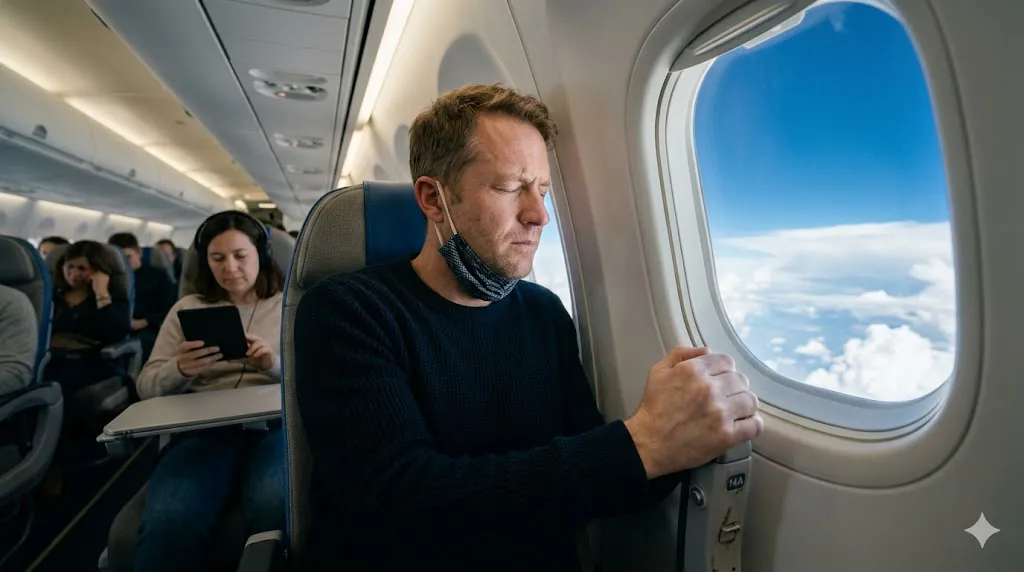
The grip on the armrest is real; the danger the grip responds to
is not. Understanding what is actually happening in the cockpit,
at the dispatch desk, and in the engineering behind the aircraft
is the most reliable fear of flying treatment available.
After 15 years monitoring flights from the OCC, I can tell you
with certainty that the vast majority of turbulence events
that frighten passengers are, from an operational standpoint, completely routine.
When passengers describe “the worst turbulence of my life,” I look at
what was on my screen at that time: moderate turbulence, PIREP-confirmed,
aircraft maintaining altitude and airspeed normally, no structural concern,
crew not declaring any emergency. The aircraft was doing exactly
what it was designed to do. What makes turbulence frightening is
the absence of information — the passenger feels the motion but has no frame
of reference for whether it is normal or not. I do, and I can tell you:
the events that genuinely require operational response are rare, brief,
and handled by systems and crews far better trained for them than the situation
appears from a window seat.
Key Takeaways
- Fear of flying is one of the most common phobias
globally, affecting an estimated 25 percent of adults
to some degree. It is also one of the most treatable, because
it is almost entirely based on misunderstanding rather than
accurate risk assessment. - The aviation system is designed around the assumption
that things will go wrong:and built with enough redundancy
that when they do, the outcome is managed before passengers
experience anything beyond a slight route change or a delayed
arrival. - Turbulence does not endanger the aircraft.
No modern commercial jet has ever been brought down by turbulence.
The wing flex you see during turbulence is engineered movement,
not structural failure in progress. - The sounds and sensations of a normal flight:
engine power changes, gear deployment, speed reductions — that
trigger fear of flying responses are all routine procedures with
specific operational explanations. - The dispatcher’s view of your flight is calm,
numerical, and almost entirely uneventful. The catastrophe
imagined during fear of flying and the operation as managed
from the OCC are barely recognizable as the same event.
1. Why Fear of Flying Persists Despite the Statistics
From my experience, statistics alone rarely convince people
who are afraid of flying is overwhelming and widely cited — so widely
cited that most people with flight anxiety have already heard it and
found it unhelpful. The probability of dying in a commercial aviation accident is
approximately 1 in 11 million per flight. The probability of
dying in a car journey of equivalent distance is orders of
magnitude higher. Passengers who drive to the airport and then
experience fear of flying upon boarding have already completed
the statistically more dangerous part of their journey. These
numbers are accurate. They are also, for the fearful flyer,
completely irrelevant — because fear of flying is not a rational
assessment of probability. It is a threat response generated
by a brain that perceives a specific environment as dangerous
regardless of what the statistics say.
The mechanism is well understood. Fear of flying draws heavily
on the brain’s threat-detection system, which evolved to respond
to perceived danger faster than conscious reasoning can intervene.
Being sealed inside a metal tube at 35,000 feet, moving at 900
kilometres per hour, over terrain where an emergency exit does
not exist, triggers an ancient system that did not evolve with
commercial aviation in mind. The lack of control — a defining
feature of being a passenger — amplifies the response because the
threat-detection system is not only responding to danger, it is
responding to the absence of any ability to respond to danger.
Understanding this mechanism does not eliminate fear of flying,
but it correctly identifies what kind of problem it is: a
mismatch between a biological threat response and a modern
environment, not an accurate reading of actual danger.
2. What Actually Happens in the Cockpit During Your Flight
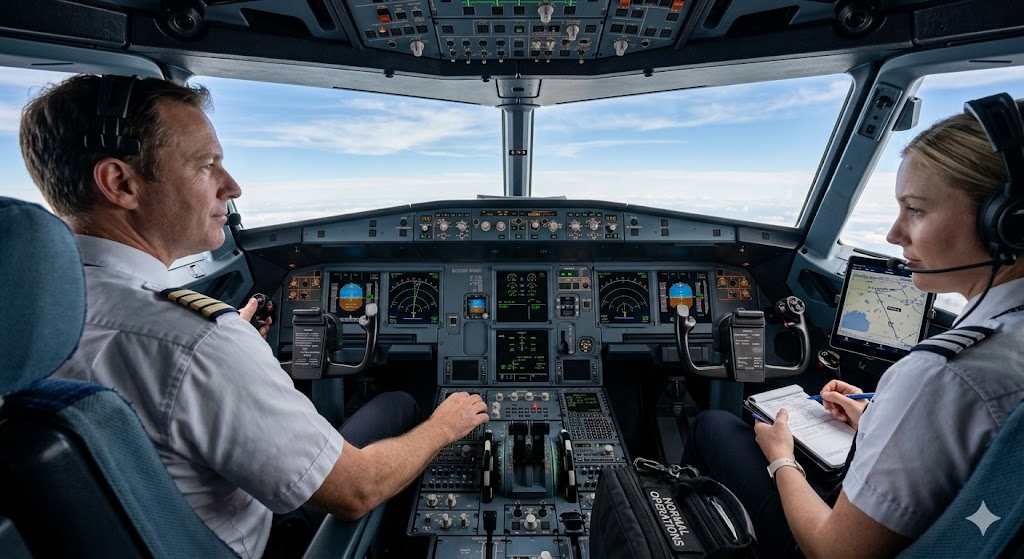
experience fear of flying: two pilots monitoring normal parameters,
reviewing documents, managing the routine administrative elements
of a flight that is proceeding exactly as planned. The drama
of the passenger imagination and the reality of the cockpit
are almost entirely disconnected.
During the cruise phase of a typical commercial flight — the
period when most fear of flying responses are active — the cockpit
environment is characterized by professional routine. The autopilot
is engaged. The flight management system is executing the filed
route. The engine parameters are within normal limits. The crew
is monitoring system displays, reviewing the weather ahead,
updating the fuel calculation for the destination, and managing
routine communications with ATC. One pilot may be eating. The
other may be reading an electronic flight bag document. Neither
is gripping anything. Neither is monitoring the structural
integrity of the wing. Neither is thinking about what would happen
if an engine failed — because if an engine did fail, the procedure
is trained to memory and the aircraft is certified to fly
indefinitely on the remaining engine.
The sounds and sensations that trigger fear of flying during
this phase are not distress signals from the aircraft — they are
the sounds of normal operation that an informed passenger would
recognize as routine. A power reduction during
descent is the crew reducing thrust as directed by the descent
profile — not an engine problem. A loud mechanical clunk
on approach is the landing gear extending and locking into
position — a sound specifically engineered to be audible to the
crew as confirmation. A sudden change in engine tone
during the approach is the autothrottle adjusting thrust to
maintain the target approach speed — automated, precise, and
entirely normal. Every one of these sounds has an explanation
that the crew is not alarmed by, because the crew knows exactly
what each sound means and expects it at the specific point in
the flight where it occurs. I explain the complete range of
these sounds and their explanations in my
airplane sounds article.
3. What the Dispatcher’s Screen Looks Like During Your Flight

of symbols moving steadily across a route map, all green, all
normal. The only flights that attract attention are the small
number where weather, fuel, or a technical advisory requires
action. The vast majority complete from pushback to gate without
a single dispatcher intervention.
From the operational control center where I work, your flight
is a symbol on a screen — a small aircraft icon moving steadily
along a line from departure airport to destination, accompanied
by a data tag showing altitude, speed, fuel state, and estimated
arrival time. In a normal shift, I monitor between 20 and 50
active flights simultaneously. The overwhelming majority of those
symbols move from left to right across the screen without
generating a single alert, a single radio call, or a single entry
in my incident log. They reach their destination on time, the
crew thanks me for the release, and the symbol disappears from
my screen as they taxi to the gate. That is the statistical
reality of commercial aviation from the inside — and it is what
fear of flying, by definition, does not imagine.
The flights that generate dispatcher attention are a small
minority — weather deviations, fuel considerations in headwinds,
minor technical advisories that require a maintenance check on
arrival. Of those, a smaller minority generate anything that
could be characterized as a significant event. Of those, the
vast majority are resolved without passengers ever knowing
anything occurred. The gap between the fear of flying scenario’
sudden, catastrophic, unmanageable — and the operational reality’
gradual, incremental, managed by multiple redundant systems and
trained professionals — is so large that it constitutes a
fundamentally different category of experience.
4. The Truth About Turbulence and Fear of Flying
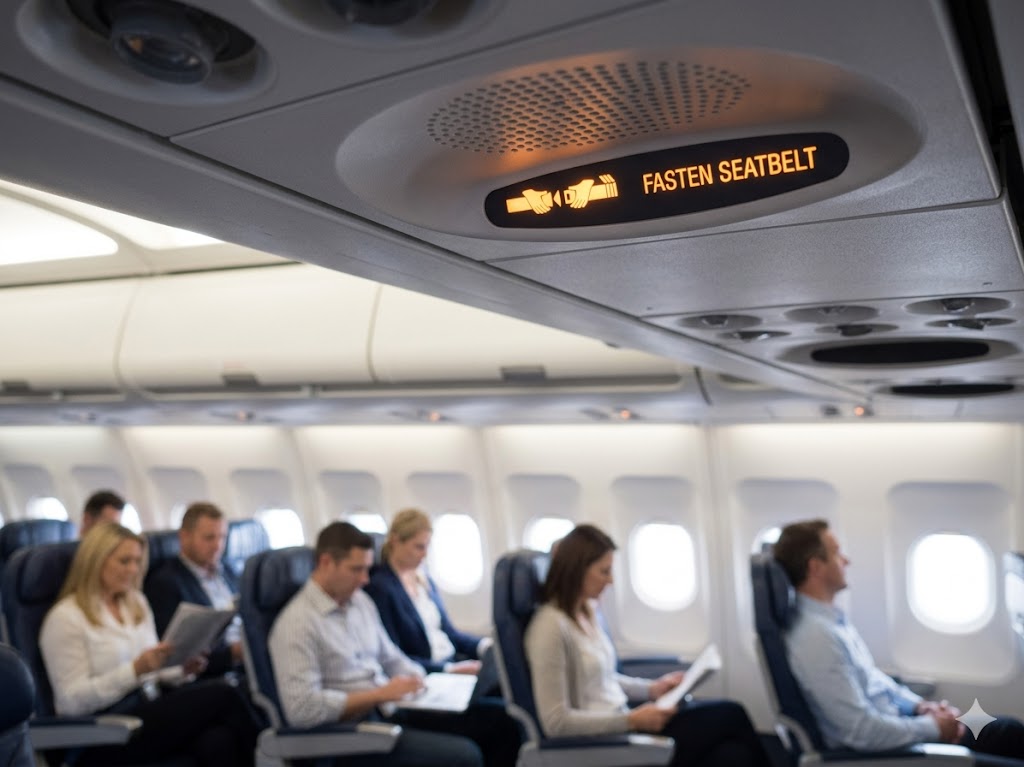
uncomfortable and because unsecured passengers can be injured by
unexpected movement. It does not illuminate because the aircraft
is in danger. The crew who illuminated it is not alarmed — they
are managing passenger safety during a normal atmospheric event.
Turbulence is the single most common trigger for fear of flying
and the single most misunderstood event in commercial aviation.
The physical experience — sudden movement, a sensation of falling,
objects shifting — is interpreted by the fear of flying brain as
evidence that the aircraft is failing or about to crash. The
engineering reality is almost the opposite: turbulence is an
atmospheric event that the aircraft is designed to absorb, and
the aircraft’s response to turbulence — flexing, pitching, rolling’
is the structure working correctly, not failing. No commercial
jet aircraft has ever been brought down by turbulence alone.
The aircraft is certified to withstand turbulence loads that
are multiples of what any atmospheric event in operational
flight history has produced.
The wing flex that is visible from a window seat during
turbulence is engineered movement — the wing is designed to flex
upward under load rather than resist the load rigidly, because
a flexible structure absorbs energy without concentrating stress.
Boeing 787 wings are tested to flex upward by more than 7 metres
before any structural concern arises. In operational turbulence,
the flex passengers see is a fraction of that. The crew
during turbulence is not alarmed — they are managing the seatbelt
sign, adjusting altitude if a smoother level is available,
and waiting for the event to pass. My detailed
explanation of what turbulence actually is, why it occurs, and
what the aircraft is doing during it is covered in my
turbulence guide—reading it before a flight is one of the
most effective fear of flying preparation steps available.
5. The Engineering That Makes Fear of Flying Statistically
Unjustified
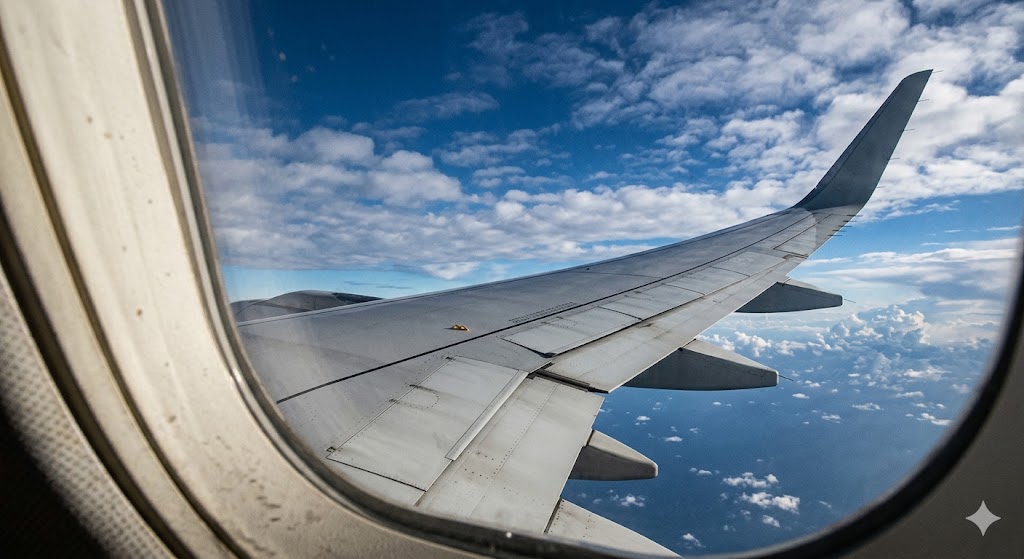
move, not to resist. This flexibility absorbs the energy of
atmospheric disturbance without concentrating stress at the
wing root. The movement passengers find alarming is the safety
feature performing exactly as designed.
Fear of flying is, at its core, a failure of imagination
about engineering — specifically, a failure to appreciate the
depth of redundancy built into every system on a commercial
aircraft. Every safety-critical system has at least one backup.
Most have two. Some have three. The hydraulic system that moves
the control surfaces has three independent circuits. The aircraft
has multiple independent generators and a ram air turbine that
deploys automatically if all generators fail. The flight management
systems run in parallel on separate processors with cross-checking
logic. The pitot tubes that measure airspeed are three separate
probes with voting logic that identifies and excludes any single
erroneous reading. A single failure — of any one system’
does not produce an emergency. It produces a procedural response
that the crew manages from a checklist while the backup system
continues the function.
The certification process that every commercial aircraft type
undergoes before carrying a single passenger is equally layered.
Aircraft are tested to structural limits that are multiples of
any load expected in commercial operation. Every emergency scenario’
engine failure on takeoff, hydraulic loss, pressurization
failure, bird strike — is tested in flight or validated in
ground testing before the aircraft receives its type certificate.
The aircraft carrying you today has been through this process,
has demonstrated compliance with every requirement, and is
maintained to a schedule that keeps every system within its
designed parameters. According to the
FAA Transport Airplane type
certification standards, no commercial aircraft may operate
passengers until it has demonstrated compliance with one of the
most comprehensive engineering validation regimes in any industry.
Fear of flying that is rooted in doubt about whether the aircraft
is airworthy is fear that the certification system was specifically
designed — and has consistently succeeded — to make unnecessary.
6. What Actually Works for Fear of Flying
The evidence base for fear of flying treatment is clear and
consistent: cognitive exposure approaches that replace
inaccurate beliefs with accurate information are more
effective than avoidance, medication alone, or general relaxation
techniques for most people. The specific mechanism is the same
one this article is attempting to engage: when the brain’s
threat-detection system fires in response to a specific trigger,
the most effective intervention is accurate information that
correctly identifies the trigger as non-threatening — not suppression
of the fear response, but replacement of the inaccurate input
driving it.
Understanding what sounds mean is one of the
most immediately effective steps. Passengers who know that the
landing gear makes a specific clunk, that the flaps produce a
whirring sound, that the engines reduce power before the descent,
and that all of these are routine and scheduled events, experience
a measurably reduced fear of flying response to those sounds
compared to passengers who hear them without explanation. The
unknown is more frightening than the known, even when the known
is objectively unremarkable. Reading accident statistics
in their correct context:not just the probability numbers
but the actual causes and the specific circumstances — is equally
useful. Most people with fear of flying imagine a generalized
catastrophic failure. The actual causes of commercial aviation
accidents are specific, documented, investigated, and addressed
through the safety recommendation system. According to
the IATA 2023 safety report,
the global accident rate for commercial aviation continues to
trend toward historical lows, with the jet accident rate among
the lowest ever recorded. That is the informed context in which
fear of flying exists — and it is a context that the fear almost
never includes.
Flying regularly is the most effective long-term
intervention for established fear of flying — not because
familiarity eliminates the trigger, but because repeated
non-catastrophic experience progressively corrects the threat
assessment the brain is making. Every completed flight that ends
normally is a data point that the brain incorporates, however
slowly, into a more accurate model of what flying actually involves.
Telling the cabin crew that you are anxious is
something I consistently recommend — not because the crew can
prevent turbulence or alter the route, but because a crew member
who knows a passenger is anxious will check in during the flight,
explain unusual sounds or sensations before they occur, and
provide the informed context that transforms a fear of flying
trigger from an unknown threat into a named, understood event.
The crew carries more fear of flying information than any
other person on the aircraft, and they are willing to share it.

the safe arrival. From the dispatch desk, this is where the flight
symbol disappears from my screen — another normal, completed operation.
The statistically near-certain outcome of every commercial flight,
completed again.
What Passengers with Fear of Flying Should Do Before and
During a Flight
Before the flight: read, not avoid. Avoidance
reinforces fear of flying by confirming to the brain that the
avoided situation is genuinely threatening. Reading about what
actually happens during flight — systems, sounds, crew procedures,
operational decision-making — replaces the imagination that drives
fear with accurate information that does not. This article is
a starting point; the individual topic articles on this site
cover every specific fear of flying trigger in operational detail.
Arrive at the airport with time to spare. The
stress of rushing to a gate compounds any pre-existing fear of
flying response. Calm boarding from a relaxed pre-departure state
produces a measurably better cabin experience than boarding in
a rush with elevated cortisol.
During the flight: name the sounds and sensations.
When the gear deploys and you hear the clunk, say to yourself
what it is — landing gear extending for approach, normal procedure.
When the engine power changes, name it — autothrottle adjusting
for descent, normal procedure. The naming process engages the
prefrontal cortex, which is responsible for rational assessment,
and partially bypasses the amygdala-driven threat response that
fear of flying operates through. It does not eliminate the
physical sensation, but it interrupts the escalation from
sensation to catastrophic interpretation. Keep the
seatbelt loosely fastened throughout the flight:not
as a fear of flying response, but because unexpected turbulence
can occur at any time, and a loosely fastened seatbelt is
the simplest and most effective protection against the only
realistic injury risk in cruise flight.
Related Reading from Aeruxo:
- How Turbulence Works and How Flights Stay Safe
- Is Flying Safe? What Aviation Experts Know About Flight Safety
- Airplane Autopilot Explained: What It Does and What Pilots Still Control
Frequently Asked Questions
How common is fear of flying?
Fear of flying affects an estimated 25 percent of the global
adult population to some degree, ranging from mild discomfort
during turbulence to complete inability to board an aircraft.
It is one of the most common specific phobias and one of the
most frequently cited reasons for avoiding air travel. It is
also well-studied and, for most people, highly treatable through
cognitive exposure approaches that replace inaccurate beliefs
about flight with accurate operational and engineering information.
Is turbulence actually dangerous for the aircraft?
No. Turbulence is an atmospheric event that the aircraft
is engineered to absorb. No modern commercial jet has ever been
brought down by turbulence. The structure is certified to
withstand turbulence loads that are multiples of anything
encountered in commercial operation. The wing flex visible
from a window seat during turbulence is engineered movement’
a safety feature that absorbs load rather than concentrating
it at the wing root. The crew during turbulence is managing
the seatbelt sign and the comfort level of the flight, not
the structural integrity of the aircraft.
What is the actual risk of dying in a commercial aviation
accident?
The probability of dying in a commercial aviation accident
on any individual flight is approximately 1 in 11 million.
The equivalent risk for car travel is orders of magnitude
higher per kilometre travelled. Commercial aviation is, by
every statistical measure, the safest form of long-distance
transport in human history — and the safety record continues
to improve as the accident data captured by flight recorders
drives successive generations of safety regulations and
technology improvements.
Why do engines sound different during descent?
Engine sound changes during descent because the crew or
autothrottle system is reducing thrust as the aircraft follows
the descent profile toward the destination. A reduction in
engine noise or a change in engine tone during descent is not
an abnormal event — it is the normal consequence of the aircraft
needing less thrust to descend than to cruise. Similarly, thrust
additions during the approach are the autothrottle maintaining
the target approach speed against the increased drag of the
extended flap and gear configuration. Both sounds are scheduled,
expected, and unremarkable from the crew’s perspective.
Does telling the cabin crew about fear of flying actually help?
Yes, consistently. A crew member who knows a passenger is
anxious will check in during the flight, explain unusual sounds
or sensations proactively, and provide the informed context
that replaces unknown threats with named, understood events.
The crew has more real-time operational information about
what the aircraft is doing and why than any other person on
board, and they are willing and trained to share it with an
anxious passenger. Informing the crew is one of the most
practically effective fear of flying management steps available
during the flight itself.
What does a flight dispatcher think about during your flight?
Weather ahead of the route, fuel state relative to the
destination forecast, and whether any operational advisories
require crew notification. Not the structural integrity of the
aircraft, not whether the engines are reliable enough, and
not whether the flight will complete safely. Those questions
are settled by engineering and certification before the aircraft
ever pushes back. The dispatcher’s attention is on the small
operational variables that require management — the ones that
produce, in a typical career, many thousands of normal completed
flights and a small number of operational diversions, holds, and
route changes. The catastrophic scenario of fear of flying
imagination is genuinely not present in the operational
management of a normal commercial flight.
Are there evidence-based treatments for fear of flying?
Yes. Cognitive Behavioural Therapy (CBT) adapted for fear
of flying, including graduated exposure to flight-related stimuli,
has a strong evidence base for reducing aviophobia. Virtual
reality exposure therapy is an increasingly available and
effective variant. Education-based approaches — structured
programs that provide accurate information about aircraft
systems, crew procedures, and statistical risk — show meaningful
effectiveness for fear of flying that is primarily driven by
misunderstanding rather than generalised anxiety. Medication
manages acute symptoms but does not address the underlying
belief structure that drives fear of flying; evidence-based
practitioners typically recommend medication as a short-term
bridge rather than a primary treatment.
Do you experience fear of flying? Which aspect of flight
makes you most anxious — and has understanding the operational
reality of any element reduced that anxiety? Share your experience
in the comments. Passenger accounts of what works for fear of
flying are some of the most useful content on this site for
other readers managing the same experience.
Disclaimer: The views expressed in this article are my own
professional opinions based on 15+ years of operational experience.
They do not represent the official position of any airline, aviation
authority, or regulatory body. Fear of flying that significantly
affects daily life or wellbeing should be addressed with a qualified
mental health professional.

Licensed Flight Dispatcher with 15+ years of experience in airline operations control. Holds FAA Aircraft Dispatcher Certificate and Republic of Korea Flight Dispatcher License (MOLIT). Specializes in flight watch, NOTAM analysis, flight planning, and operational control at a Korean LCC. IOSA audit participant and author of multiple airline operational manuals, including Emergency Response, De-icing, and OCC Procedures.