By Aeruxo — Licensed flight dispatcher (study guide) | 15+ Years in Airline Operations
Most people believe cheap flights are about timing the search. They’re wrong. Airlines don’t price tickets based on when you click — they price them based on demand patterns most passengers never see. After 15 years in airline operations control, I’ve watched exactly which flights go out half-empty — and which sell out months in advance. The cheapest flights are not random. They are predictable.
I once flew Seoul to London for less than a domestic train ticket. The flight was on a Tuesday in February, departing at 0640. The cabin was approximately 60 percent full. The passengers around me were a mix of business travelers on corporate contracts, airline industry employees using staff travel benefits, and two backpackers who had clearly done their research. Nobody else seemed particularly interested in why the seat beside me was empty. I was. After 15 years watching the load factor data on the flights I dispatch — seeing which routes fill on which days, at which times, in which seasons — I have a reasonably precise understanding of when the cheapest time to fly actually is, and why. It has nothing to do with clicking the right button on a booking website. It has everything to do with understanding the demand patterns that drive airline pricing from the inside.
Airline pricing is not random, and it is not purely algorithmic opacity. It follows identifiable demand patterns that are driven by the same factors every year: business travel cycles, leisure travel seasons, school calendars, and the specific operational economics of the routes the airline operates. Understanding these patterns does not require access to the revenue management software I see from the dispatch desk — it requires understanding the logic behind it. After 15 years observing load factors, seasonal demand curves, and the specific days and times when seats go unsold on routes I know intimately, I want to share what the best time to book flights actually looks like from the inside of the industry.
This article is based on real airline dispatch operations, where flight demand, load factors, and pricing patterns are monitored daily.

Key Takeaways
- Airline pricing follows demand, not cost. The cheapest time to fly is when demand is lowest — which is predictable, seasonal, and largely consistent year over year on most routes.
- Tuesday and Wednesday departures are consistently the cheapest days to fly on most leisure routes, because business travel concentrates on Monday/Friday and leisure travel peaks on weekends.
- January, February, and September are the lowest-demand months on the majority of international routes — the post-holiday and post-summer troughs where load factors drop and airlines release their lowest fare inventory.
- Early morning and late evening departures are consistently cheaper than mid-day flights because they are less convenient — and what is inconvenient for most travelers is financially advantageous for flexible ones.
- Booking 6 to 8 weeks before departure is the optimal window for most leisure routes — early enough to access low fare inventory, late enough to benefit from any inventory release as the departure approaches.
- The cheapest time to fly on a specific route is the specific combination of day, time, and season that minimizes demand on that route — and it varies by route, not by universal rule.
1. How Airline Pricing Actually Works
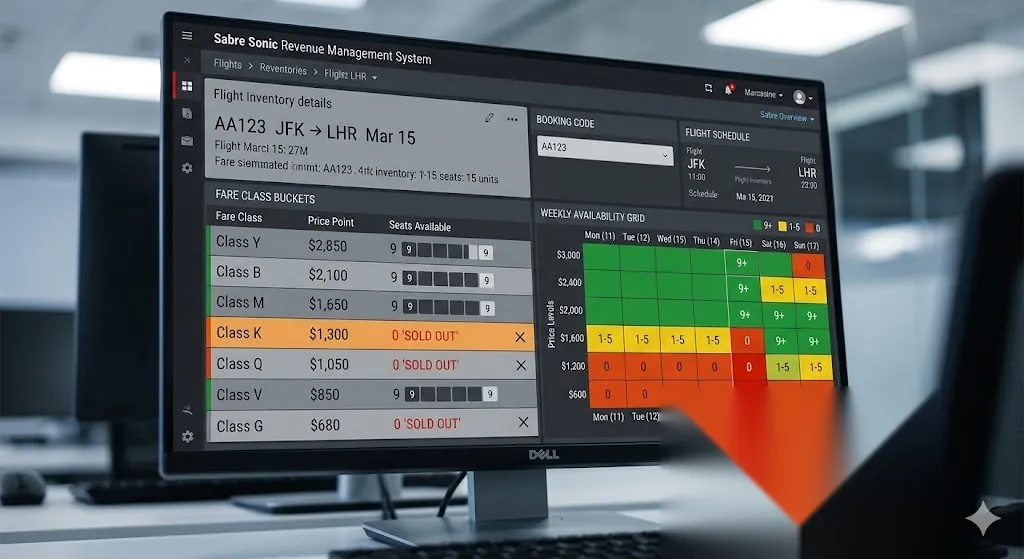
Every airline seat is sold from a defined inventory of fare classes — labeled with single letters that represent progressively lower price points from the full-fare unrestricted business class (J, C) through multiple economy sub-classes down to the cheapest available promotional fare (Q, V, G, or similar codes depending on the carrier). The revenue management system allocates a specific number of seats to each fare class for each departure. When demand fills the seats in a low fare class, those seats are closed and the next higher fare class opens. The price you see when you search for a flight reflects which fare class is currently available — not what the airline chose to charge that day, but which inventory level the demand trajectory has reached by the time you search.
The cheapest time to fly is therefore not primarily about when you search or book — it is about which flights have low enough demand that the lowest fare class seats remain available. On a Tuesday morning departure from Seoul to Bangkok in February, the revenue management system may have allocated 40 seats to the lowest fare class and, with three weeks remaining before departure, only 12 of those 40 seats are sold. The remaining 28 lowest-class seats are available to anyone who searches that specific flight. On a Friday afternoon departure on the same route in August, the lowest fare class sold out six months before departure and you will pay 3 to 4 times more for the next available inventory level. Same aircraft. Same route. Completely different pricing — entirely driven by demand.
2. The Cheapest Days to Fly

The day-of-week pricing pattern is one of the most consistent and reliable elements of the cheapest time to fly calculation. Tuesday and Wednesday departures are consistently the lowest-priced days on most leisure routes because they sit at the trough of two demand curves. Business travel, which generates the highest fares and fills early inventory, concentrates on Monday outbound and Friday return — business travelers want to arrive on Monday for meetings and leave Friday afternoon to be home for the weekend. Leisure travelers peak on Friday and Saturday departures — the weekend departure that maximizes time at the destination. Tuesday and Wednesday fall into the gap: low business demand because meeting schedules avoid mid-week travel, and low leisure demand because the mid-week departure means spending working days in transit.
Saturday departures represent a specific exception to the weekend premium: on many leisure routes, Saturday departures are cheaper than Friday and Sunday because they represent the end of the outbound leisure peak. A passenger departing Saturday arrives at the destination Saturday evening — losing a day of leisure time compared to Friday arrival. This inconvenience suppresses Saturday demand relative to Friday on typical leisure routes, creating a moderate price advantage. Sunday departures are among the most expensive on business-heavy routes because they represent the Sunday evening return of business travelers who spent the weekend at their departure city — creating a demand spike that revenue management captures with premium pricing. The cheapest time to fly is rarely Sunday on any business-primary route.
3. The Cheapest Months to Fly

The annual demand cycle creates the most significant cheapest time to fly opportunity for flexible travelers. On the routes I dispatch — primarily Japan, China, and Southeast Asia — the demand pattern repeats with remarkable consistency year over year. January and February are the deepest trough on most routes: the post-holiday period when corporate travel budgets reset and leisure demand drops sharply after the Christmas and New Year peak. Airlines that filled planes at premium prices in December face suddenly empty cabins in January, and the revenue management response is to open low-fare inventory that would never appear in December. The cheapest time to fly on most international routes is the second or third week of January — after the New Year holiday traffic clears but before Valentine’s Day and lunar New Year create demand spikes on specific routes.
September is the other consistently cheap month across most international routes — the post-summer trough when European and North American school terms resume, suppressing family leisure travel, and before the autumn business travel season reaches its peak. The shoulder seasons of late April to early June and late September to early November offer the best combination of cheap fares and favorable weather at most destinations — lower demand than peak summer and winter holiday periods, but better destination conditions than the deep off-peak months. July, August, and the two weeks around Christmas are universally the most expensive periods on leisure routes — the months when school holidays align globally, demand exceeds supply, and the cheapest time to fly pricing simply does not exist on popular routes. If travel during these periods is necessary, booking 4 to 6 months in advance is the only strategy that accesses any low-fare inventory.
4. The Cheapest Times of Day to Fly

Within any given departure day, specific departure times carry significantly lower demand — and therefore lower prices — than others. Early morning departures (0530 to 0700) are consistently among the cheapest time to fly options within any day. The alarm required, the early airport arrival, and the compressed morning before departure suppress demand from every traveler who has a choice about their departure time. Airlines price these departures lower to fill seats that the premium time-preference of most travelers would leave empty. For the flexible traveler who does not mind a 0430 wake-up, the cheapest time to fly frequently involves an early morning departure that arrives at the destination in the early afternoon — actually one of the most useful arrival windows for a leisure trip.
Late evening departures (2130 to 2359) carry a similar discount logic on many routes: the late arrival at the destination, the late return from the airport, and the disrupted sleep pattern suppress demand enough that low-fare inventory remains available. Mid-morning to mid-afternoon departures (0900 to 1600) are the most expensive time-of-day window on most routes — convenient enough for business travelers who need to be functional on arrival, and comfortable enough for leisure travelers who prefer not to wake at 4am. The convenience premium on a 1000 departure versus a 0600 departure on the same route can represent 20 to 35 percent of the total fare difference. The cheapest time to fly within any day is typically the first or last departure, not the one that fits most naturally into the working day.
5. How Far in Advance to Book for the Cheapest Fares
The booking window for the cheapest time to fly is one of the most debated topics in travel optimization, and the answer is route-dependent rather than universal. The conventional wisdom of “book as early as possible” is partially correct and partially misleading. On high-demand routes and peak periods — school holidays, major events, popular leisure routes in summer — the lowest fare inventory sells out months before departure. Booking 3 to 6 months in advance on these routes is genuinely the cheapest time to fly strategy because the alternative is watching the price escalate as low inventory depletes. On a Christmas departure from Seoul to London on a popular carrier, the cheapest fares are typically gone by September.
On lower-demand routes and off-peak periods, the optimal booking window is typically 6 to 8 weeks before departure. Revenue management systems on these flights often release additional low-fare inventory 45 to 60 days before departure as the system projects that the flight will not fill at current prices and adjusts the fare class allocation to stimulate demand. A traveler who books 3 months in advance on a low-demand February departure may pay more than one who waits until 6 weeks out — because the inventory release has not yet occurred. Last-minute booking is the strategy most commonly misunderstood as the cheapest time to fly. On leisure routes, airlines rarely discount unsold inventory at departure because the marginal cost of an empty seat is low and the reputational cost of training passengers to wait for last-minute deals is high. Last-minute fares on leisure routes are as often premium as they are cheap — the remaining inventory is the high-fare classes that business travelers or late-booking premium passengers pay. True last-minute cheapness exists on specific routes with chronic oversupply, not as a general rule. According to IATA’s airline economics reporting, average industry load factors consistently exceed 80 percent on most commercial routes, meaning the empty-seat inventory that last-minute deals depend on is structurally smaller than the strategy assumes.
6. Route-Specific Patterns and the Dispatcher’s View
The cheapest time to fly is ultimately route-specific because demand patterns vary by route in ways that general seasonal advice does not capture. On our Korean LCC network, the cheapest time to fly Seoul to Tokyo is different from the cheapest time to fly Seoul to Bangkok, which is different again from Seoul to Sydney — because the demand drivers for each route are different. Tokyo routes carry heavy Japanese leisure demand peaking in spring cherry blossom season and autumn foliage season — two windows that create demand spikes the general calendar does not predict. Southeast Asian routes peak during Korean winter holidays when Korean leisure travelers seek warm destinations, making January — globally a cheap month — a premium period on Jeju-to-Bali and similar routes. Long-haul European routes from Korea follow closer to the global pattern, with January-February and September representing genuine cheapest time to fly windows.
From the dispatch desk, I see the load factor on every flight I release. The pattern I observe is consistent with what the revenue management logic predicts: the flights that depart with the most empty seats are the ones with the lowest fares; the flights that depart full are the ones that sold out at high prices. The passengers who found the cheapest time to fly on any given departure made the same trade-off: they accepted the less convenient departure day, time, or season in exchange for the fare discount that the airline offered to fill seats that demand would otherwise leave empty. The cheapest time to fly is always available somewhere in the flight schedule — the question is whether the traveler’s flexibility extends to the specific inconvenience that the cheapest seat requires. For how operational factors beyond pricing — delays, cancellations, and network disruptions — affect the economics of booking the cheapest available flight, my flight delay article covers the operational risks that price-optimized bookings sometimes expose travelers to.
What Passengers Should Do to Find the Cheapest Time to Fly
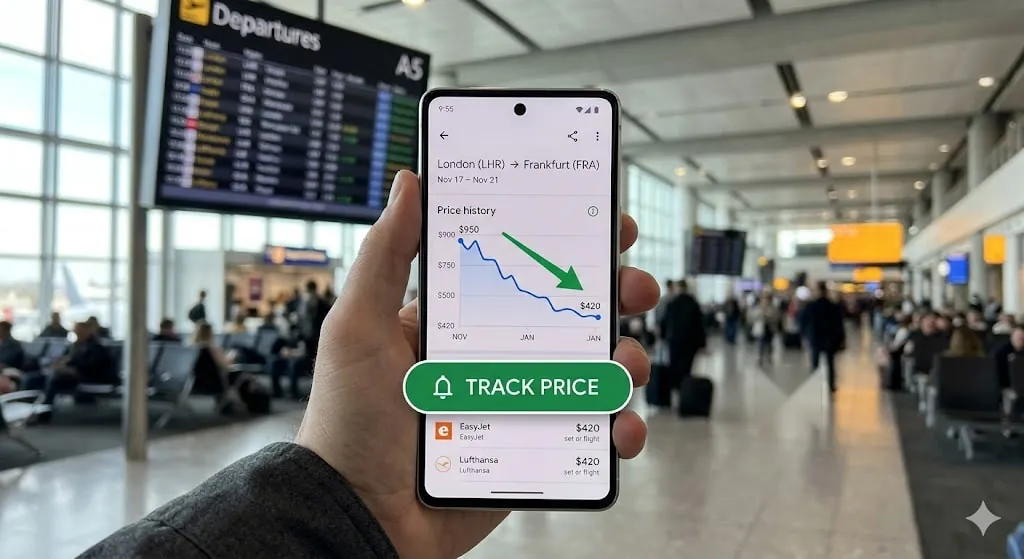
Set price alerts on Google Flights or a comparable tool for your specific route and date range, then watch the alerts over a 4 to 6 week period before booking. The alert will notify you when the inventory release or demand drop creates the cheapest time to fly window for your specific flight — giving you the action signal rather than requiring you to check manually. Search by month, not by date. Google Flights and similar tools allow you to view the price calendar for a full month, showing you immediately which days in the month carry the lowest fares. The cheapest time to fly within a given month is visible in 30 seconds with this view — and it is almost always a Tuesday or Wednesday departure, confirming the pattern described above.
Consider the cheapest nearby airports. On many routes, a 90-minute ground transfer to or from a secondary airport — the kind that budget carriers serve — produces a total cost (flight plus transfer) significantly below the direct fare from the primary airport. On the Seoul-Europe corridor, flights routing through connecting hubs in the Middle East or Southeast Asia are consistently 20 to 40 percent cheaper than non-stop options — with the trade-off of a longer journey time and a connection. Be flexible about your return date. The cheapest time to fly outbound may be Tuesday; the cheapest return may be Wednesday. A two-day extension of a trip that results in both the cheapest outbound and return fare pays for itself quickly at the fare savings available. The cheapest time to fly is a combination of parameters, not a single date — and optimizing all of them simultaneously produces the largest savings. According to Skyscanner’s booking data analysis, the optimal booking window and cheapest travel days are consistent with the patterns observed from the operational side — confirming that the consumer fare data and the airline’s operational load factor data tell the same story from opposite ends of the booking process.
Related Reading from Aeruxo:
- Airline Overbooking: Why It Happens (Explained by a Flight Dispatcher)
- Night Flights Explained: Why Many Red-Eye Flights Feel Smoother
- Why Flight Delays Happen in Real Airline Operations
Frequently Asked Questions
What is the cheapest time to fly in general?
The cheapest time to fly is when demand on your specific route is lowest. Across most international leisure routes, this means: Tuesday or Wednesday departures (lowest day-of-week demand), January or February travel (post-holiday trough), early morning or late evening departure times (lowest convenience preference), and a booking window of 6 to 8 weeks before departure on off-peak routes (when inventory releases occur). The combination of all these factors on a single booking produces the deepest discount available.
Is it cheaper to fly on Tuesday or Wednesday?
Both Tuesday and Wednesday departures are consistently among the cheapest days to fly on most leisure routes, with Tuesday often the slightly cheaper of the two. The reason is structural: business travel concentrates on Monday and Friday, leisure travel peaks Friday through Sunday, and the mid-week valley represents the lowest demand point in the weekly cycle. Revenue management systems allocate more low-fare inventory to these departures because they need to stimulate demand that the market does not provide naturally.
What months have the cheapest flights?
January and February are the cheapest months on most international routes globally — the post-Christmas and New Year demand trough when leisure travel drops sharply and business travel budgets are being reset. September is the second cheapest period on many routes. The shoulder seasons of late April to early June and mid-September to late October offer the best combination of lower fares and favorable destination weather. July, August, and the two weeks around Christmas are universally the most expensive periods on leisure routes.
How far in advance should I book the cheapest flight?
The optimal booking window is route and season dependent. For peak period travel (school holidays, major events, summer), booking 3 to 6 months in advance is necessary to access any low-fare inventory before it sells out. For off-peak travel on lower-demand routes, 6 to 8 weeks before departure is typically the window when revenue management systems release additional low-fare inventory to stimulate demand on flights that are not filling at current prices. Last-minute booking is not reliably the cheapest time to fly on leisure routes — remaining inventory at departure is often the high-fare classes that did not sell, not discounted unsold seats.
Is the cheapest time to fly always early morning?
Early morning departures (0530 to 0700) are consistently among the cheapest departure times within any given day because the inconvenience of a predawn departure suppresses demand from travelers who have flexibility about their departure time. Late evening departures (2130 to 2359) carry a similar logic. However, early morning is not always the cheapest option — on routes where the early morning departure is the only one and demand is high regardless, the time-of-day premium disappears. The cheapest time to fly within any day is whichever departure has the lowest demand, which is typically the least convenient time rather than a fixed hour.
Does the cheapest time to fly vary by route?
Yes — significantly. The cheapest time to fly is driven by the demand pattern specific to each route, which depends on the traveler mix (business versus leisure), the cultural holiday calendar of the origin and destination countries, and the competitive landscape on that route. Seoul to Tokyo has different demand peaks than Seoul to Bangkok, which differs from Seoul to London. The general principles (Tuesday/Wednesday departures, January/February off-peak, early morning discount) apply broadly, but the specific cheapest time to fly window for a given route requires checking actual prices rather than assuming the general pattern applies.
Why does flying the same route cost so differently on different days?
Because the price reflects the demand on that specific departure, not the cost of operating the flight — which is largely fixed regardless of how many passengers are aboard. The airline’s revenue management system monitors booking pace against historical demand curves and adjusts fare class availability to maximize revenue per departure. On days when demand is low, the system keeps low fare classes open to attract price-sensitive travelers. On days when demand is high, low fare classes are closed early and only higher-priced inventory remains. The same seat can cost two to four times more on a high-demand departure than a low-demand one on the same route — solely because of demand, not cost.
Have you ever found a significantly cheaper fare by changing your travel dates or departure time? Share your cheapest time to fly discovery in the comments — reader experiences of specific routes and savings help others apply the same approach to their own travel planning.
Disclaimer: The views expressed in this article are my own professional opinions based on 15+ years of operational experience. Airfare pricing is dynamic and route-specific — specific price patterns may vary from the general principles described here. Always verify current prices through booking tools for your specific route and dates.

Licensed Flight Dispatcher with 15+ years of experience in airline operations control. Holds FAA Aircraft Dispatcher Certificate and Republic of Korea Flight Dispatcher License (MOLIT). Specializes in flight watch, NOTAM analysis, flight planning, and operational control at a Korean LCC. IOSA audit participant and author of multiple airline operational manuals, including Emergency Response, De-icing, and OCC Procedures.