By Aeruxo — Licensed flight dispatcher (study guide) | 15+ Years in Airline
Operations
Most passengers assume pilots are “highly trained.”
They are.
But almost no one understands how extreme that training
actually is — or how often it is re-tested.
Before every flight I release as a dispatcher,
I verify something most passengers never think about:
If even one requirement is not valid, the aircraft does not depart.
No exceptions.
As a flight dispatcher with over 15 years in airline operations,
I verify pilot qualifications before every flight. I check their type rating,
medical certificate, and recent training status. If any of these are not valid,
the aircraft does not depart — no matter how experienced the captain is.
Pilot training is the foundation of the aviation safety system
that produces the statistics I regularly cite when writing about
fear of flying. Passengers who board a commercial aircraft
trust the crew with their lives without typically knowing
anything about the qualification process that produced that
crew. Most cannot estimate how many hours of training the
captain has completed, what the simulator check schedule looks
like, or how frequently the crew’s medical fitness is verified.
After 15 years as a flight dispatcher — verifying crew
qualifications before every flight release — I want to explain
exactly what pilot training involves, what the standards require,
and why the crew on your next flight has been assessed,
examined, and tested more comprehensively than almost any
other professional you will trust today.
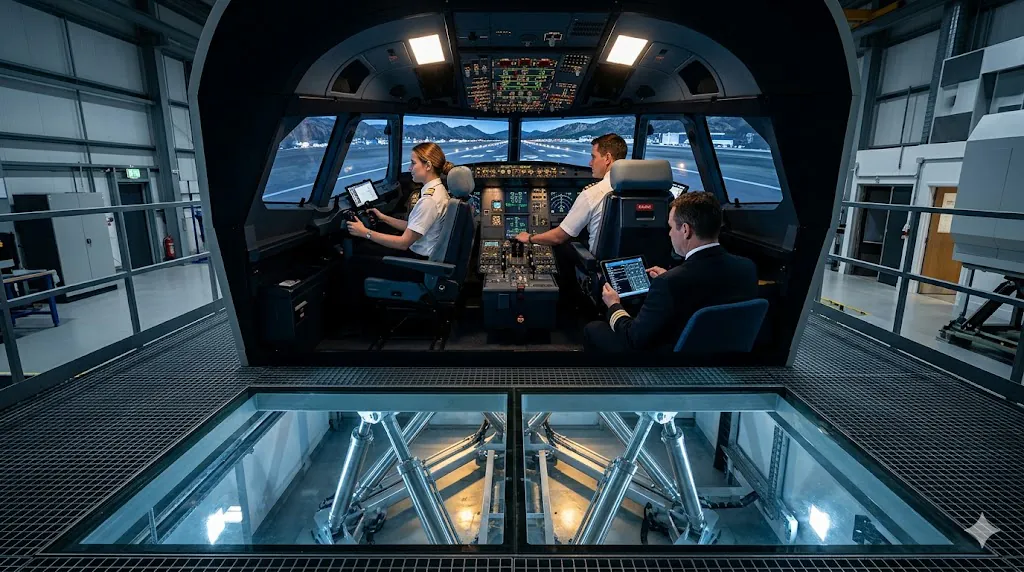
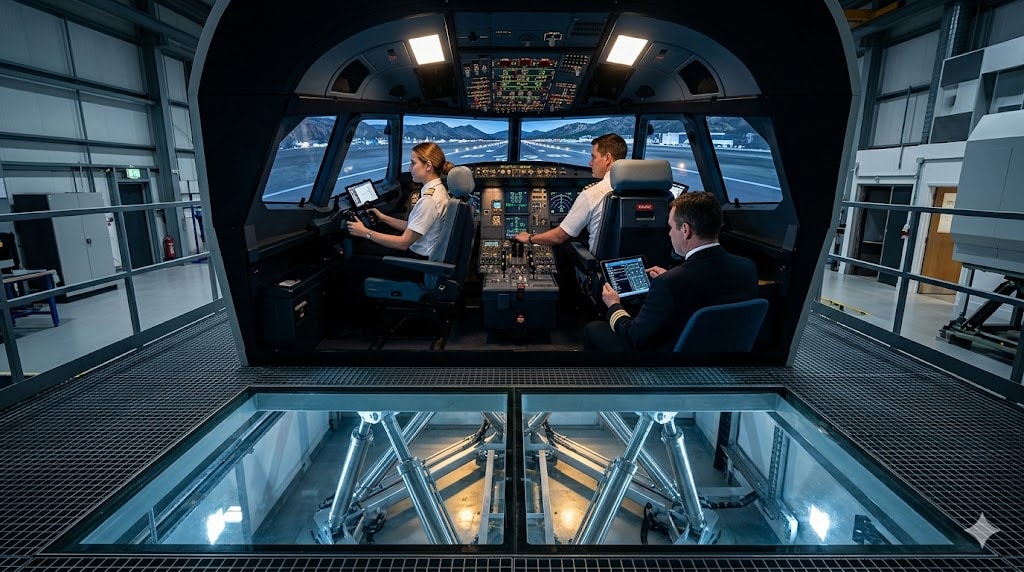
of airline pilot training. Every emergency procedure, every abnormal
checklist, every extreme weather scenario that a crew will face
in a career is trained and tested here before it is ever encountered
in the actual aircraft. The simulator is where pilot training
produces the calm professionalism passengers rely on.
Before every flight I release, I verify three things about the operating crew:
type rating currency, medical certificate validity, and recency requirements —
specifically, whether the pilot has completed the minimum number of
takeoffs and landings in the aircraft type within the required recency window.
If any of these are not current, the dispatch release cannot be issued
and the flight does not depart. In 15 years, I have had to ground crew members
on two occasions for recency lapses identified during pre-flight verification —
not because the pilots were unaware, but because the administrative
tracking had slipped in the scheduling system. The dispatcher is the final operational
check on crew qualification before departure. Most passengers assume
that check happens automatically. It does — because a dispatcher runs it
manually on every single flight.
Key Takeaways
- Becoming an airline captain takes a minimum of 7 to
10 years and thousands of hours of flight experience:
from first flight lesson to left seat of a commercial jet.
The timeline is longer than most medical specializations. - Pilot training never ends. Airline pilots
return to the simulator every 6 months for recurrent training
and checking throughout their entire career. A 30-year captain
has completed over 60 simulator assessments. - The Class 1 medical certificate is one of the most
rigorous occupational health standards in any profession.
It covers cardiovascular, neurological, psychological, and
visual requirements that ground pilots when any parameter
falls outside defined limits. - A Type Rating is aircraft-specific. A pilot
qualified on the Boeing 737 cannot legally fly an Airbus A320
without completing a full type rating course — typically 6 to
8 weeks of full-time training. - The dispatcher’s role includes verifying every crew
qualification before every flight release. Pilot
training certification is not a background assumption — it is a
document check that happens on every single dispatch.
This article is based on real-world airline dispatch
operations, where every flight release requires verification
of pilot training and certification.
1. The Path From First Flight to Airline Captain
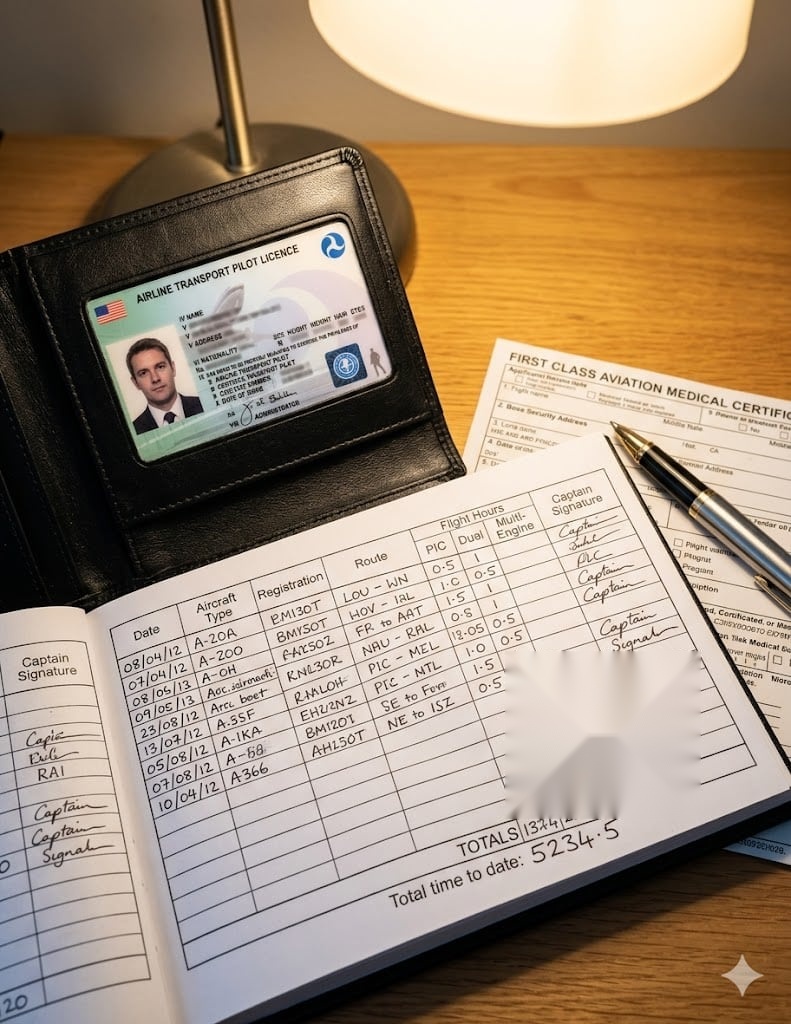
represent a commercial pilot’s career. The licence certifies
the legal qualification; the logbook records every flight hour
that built the experience behind it. The minimum hours to qualify
for the ATPL are a starting point, not a destination.
Pilot training follows a structured progression that spans
years and multiple licence levels before a pilot reaches the
left seat of a commercial jet. The entry point is the Private
Pilot Licence (PPL)—the qualification that permits flying
non-commercially, typically achieved after 45 to 60 hours of
flight training. The PPL is the foundation that all subsequent
pilot training builds on, but it qualifies the holder for
recreational flying only. Commercial operations require the
Commercial Pilot Licence (CPL), which adds instrument flying
qualifications, more complex aircraft endorsements, and a
significantly higher flight hours requirement — typically 200
hours minimum, though competitive airline programs require
substantially more.
The Airline Transport Pilot Licence (ATPL) is the highest
level of pilot training certification — the qualification required
to act as Pilot-in-Command on a commercial airliner. The ATPL
requires a minimum of 1,500 flight hours under FAA standards,
or 1,500 hours under ICAO standards, with specific requirements
for instrument time, night flying, cross-country experience,
and multi-engine time. In practice, pilots reaching their first
airline position typically have 2,000 to 4,000 hours, because
the competitive entry requirements of major carriers exceed
the regulatory minimums. From first flight lesson to first
officer position at a regional carrier typically takes 5 to
7 years. From first officer to captain at a major carrier’
including the seniority queue, command upgrade training, and
line qualification process — adds another 5 to 15 years depending
on the airline’s growth rate and fleet size.
2. The Type Rating: Why Every Aircraft Is a New Qualification
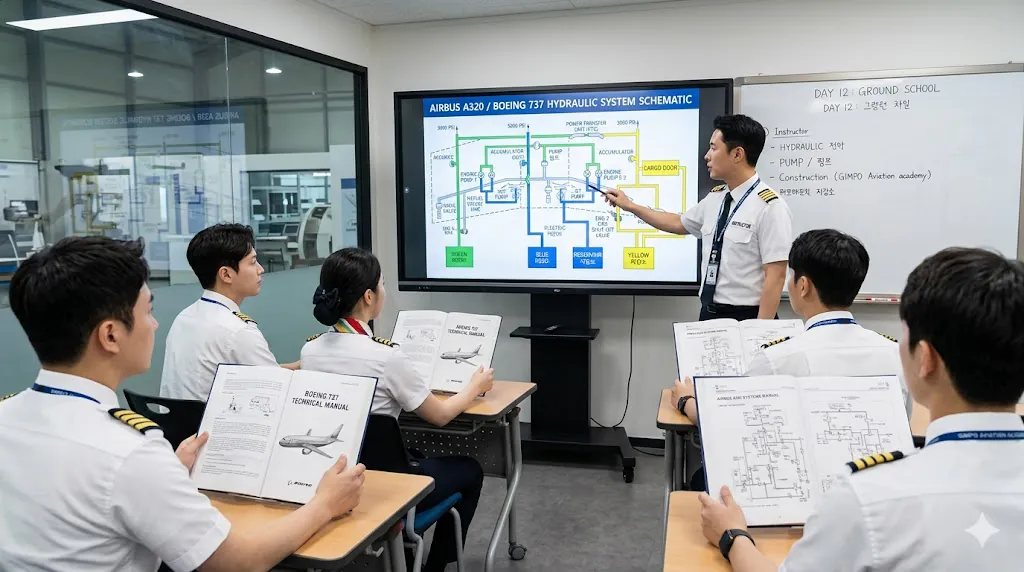
the simulator for their new aircraft type, they spend weeks in
the classroom mastering every system — hydraulics, electrics,
pressurization, fuel, flight controls — at the level of detail
required to manage failures in any combination. The ground school
is the intellectual foundation that makes simulator training
meaningful.
A commercial pilot licence does not authorize a pilot to fly
any aircraft. It authorizes the holder to fly the specific
aircraft types listed on the licence as type ratings — individual
qualifications earned through a specific training program for
each aircraft type. A pilot moving from a Boeing 737 to an
Airbus A320 must complete a full type rating course, despite
both being narrow-body jets serving similar routes. The aircraft
systems, normal and abnormal procedures, performance profiles,
and flight management philosophies are sufficiently different
between types that separate training is not a bureaucratic
formality — it is a genuine safety requirement.
A standard type rating pilot training course runs 6 to 8
weeks for an experienced pilot, or longer for a pilot transitioning
from a significantly different aircraft category. The course
begins with ground school — classroom and computer-based training
covering every aircraft system in depth, including the failure
modes and abnormal procedures associated with each. Ground school
is typically followed by Fixed Base Simulator (FBS) training,
which covers normal and abnormal procedures in a static cockpit
environment before the pilot moves to the full-motion Level D
simulator. The Level D simulator — the highest certification level,
approved by aviation authorities as equivalent to the actual
aircraft for training and checking purposes — is where the
core pilot training occurs: normal operations, abnormal and
emergency checklists, adverse weather, and the specific scenarios
that the checking authority has defined as the competency
standard for the type. The type rating check itself is conducted
by an examiner authorized by the national aviation authority
and must be passed before the pilot may fly the actual aircraft
in commercial operations.
3. Recurrent Training: Why Pilot Training Never Stops
Qualifying on an aircraft type is not a permanent achievement’
it is the starting point of a continuous assessment cycle that
continues for the pilot’s entire career. Recurrent pilot training
is mandatory under ICAO standards and the national regulations
of every certificated aviation authority: airline pilots must
complete a simulator training and checking event at intervals
no greater than every 6 months. For a pilot who begins flying
commercially at age 25 and retires at 65, this means completing
a minimum of 80 simulator assessments across their career’
each one requiring them to demonstrate competency on normal
operations, abnormal and emergency procedures, and the specific
scenarios the authority has identified as the current period’s
training emphasis.
The 6-month simulator check is called a Line Operational Check
(LOC) or Proficiency Check (PC) depending on the jurisdiction.
It is conducted in the Level D simulator over a period of 3 to
4 hours and covers a defined curriculum of scenarios that
changes each training cycle to address current safety priorities.
If a pilot fails a simulator check — demonstrates inadequate
performance on any required element — they cannot fly commercially
until they pass a remedial training and re-check sequence. There
is no seniority exception. A captain with 20,000 hours who fails
a simulator check is grounded until they demonstrate competency.
Line checks add another layer: a check captain
rides the jump seat on actual commercial flights at defined
intervals — typically annually — observing and assessing the crew’s
performance in real operational conditions rather than the
simulator environment. The combination of simulator checks every
6 months and line checks on actual flights means that the crew
flying your aircraft today has been assessed within the last
6 months on the specific skills required to manage the exact
type of emergency you hope never occurs.
4. The Class 1 Medical: The Standard That Grounds Careers
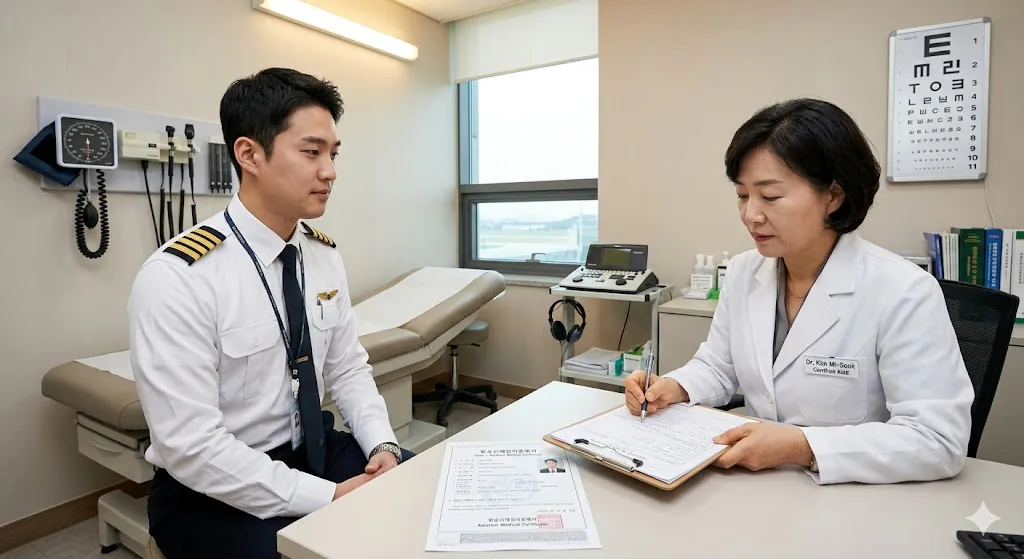
neurological, visual, and psychological assessment by an Aviation
Medical Examiner. Every airline pilot holds a current Class 1
certificate. When it expires or is suspended, the pilot does
not fly — regardless of experience, seniority, or operational
pressure.
The Class 1 medical certificate is the occupational health
standard for commercial pilots — required to be current and valid
for every flight operated as Pilot-in-Command or co-pilot on
a commercial aircraft. It is assessed by Aviation Medical
Examiners (AMEs) designated by the national aviation authority
and must be renewed annually for pilots under 40, and every
6 months for pilots over 40. The assessment covers a range
of physiological and psychological parameters that exceed the
requirements of almost any other occupational health standard.
Cardiovascular requirements include resting
ECG, exercise ECG above specified thresholds, and blood pressure
limits that are stricter than general clinical treatment
thresholds — a blood pressure level that a general practitioner
would manage with lifestyle advice can ground a commercial pilot
pending specialist review.
Visual requirements are detailed and specific:
corrected visual acuity, color vision, visual fields, and
contrast sensitivity all have defined standards that must be
met. A pilot who develops a color vision deficiency that
prevents correct interpretation of cockpit warning light colors
may have their certificate restricted or revoked regardless
of their flying experience. Neurological and psychological
requirements have expanded significantly in the decade
following the 2015 Germanwings Flight 9525 accident, in which
the co-pilot deliberately crashed the aircraft, killing 150
people — an event that revealed inadequate mental health
assessment and disclosure processes in the existing medical
certification framework. Post-Germanwings reforms in most
jurisdictions strengthened the psychological assessment component
of the Class 1 medical and established peer support programs
designed to create reporting pathways that pilots could use
without career penalty. The medical standard that protects
passengers is the same standard that periodically ends the
careers of experienced pilots who can no longer meet its
requirements — a trade-off that the certification system makes
without apology.
5. What the Dispatcher Verifies Before Every Flight
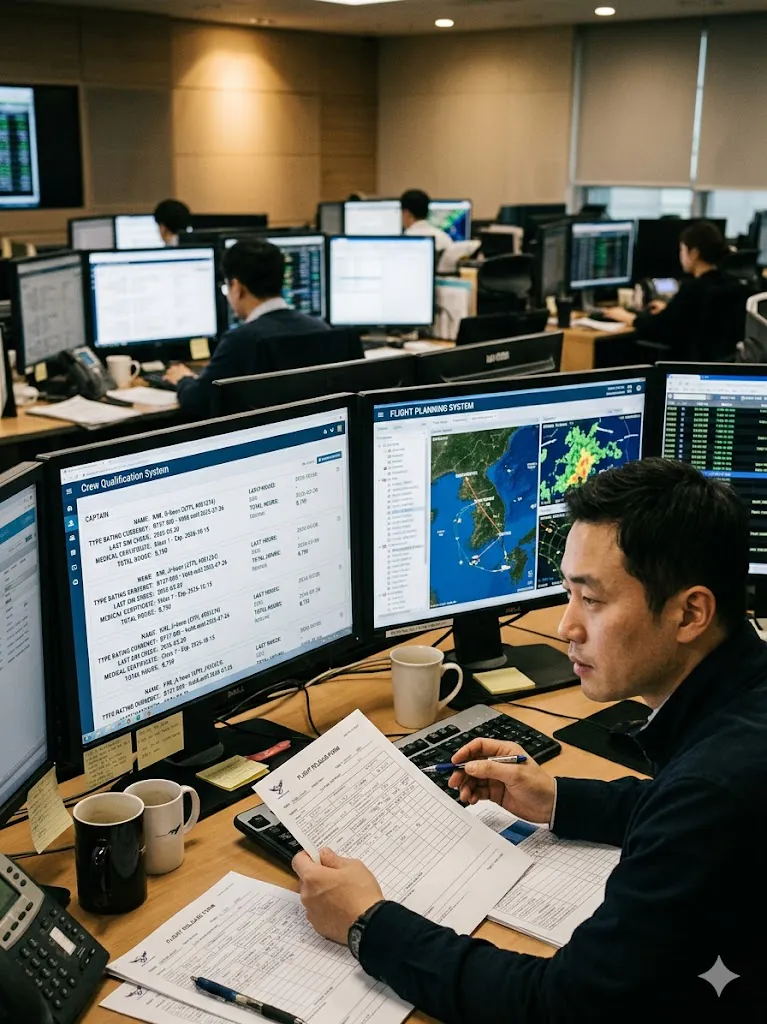
type rating currency, simulator check date, medical certificate
expiry, route and aerodrome qualifications — all verified against
the flight’s requirements before the operational release is
signed. A single expired item grounds the flight regardless
of schedule pressure.
The dispatcher’s role in the pilot training system is the
verification function that ensures qualified crews are assigned
to every flight. Before releasing any flight, I check the
following crew qualifications against the specific requirements
of that flight: Type rating currency:confirming
the captain and first officer both hold current type ratings
for the aircraft type assigned and that the proficiency check
within that type rating is within its validity period.
Medical certificate validity:confirming both
crew members’ Class 1 certificates are current for the departure
date. A certificate that expires tomorrow is still valid today;
one that expired yesterday grounds the flight.
Route and aerodrome qualifications:most airlines
require pilots to have completed route familiarization or
a route check for specific routes, and aerodrome qualifications
for destinations with special approach requirements (steep
approaches, special navigation procedures, specific visibility
minima). A captain who holds a current type rating but has
not completed the specific aerodrome qualification for the
destination may not operate as PIC to that airport.
This verification is not a formality. In 15 years of dispatch,
I grounded the flight.s three times for expired crew qualifications
discovered during the pre-release check — including the medical
certificate case I described in the opening. In each case,
the qualification issue was a genuine oversight rather than
deliberate non-compliance, but the outcome was the same: the
flight did not depart until a qualified replacement crew was
assigned. The qualification check exists precisely because
operational pressure — schedule, passenger impact, crew
convenience — can create incentives to overlook a borderline
qualification that the safety system requires to be current
without exception. According to the
FAA Airline Transport Pilot
certification requirements, the crew qualification standards
that dispatchers verify are the same standards that determine
whether a flight is legally authorized to operate under
federal aviation regulations — a non-negotiable legal boundary
rather than an operational guideline.
6. CRM: The Pilot Training That Saves the Most Lives
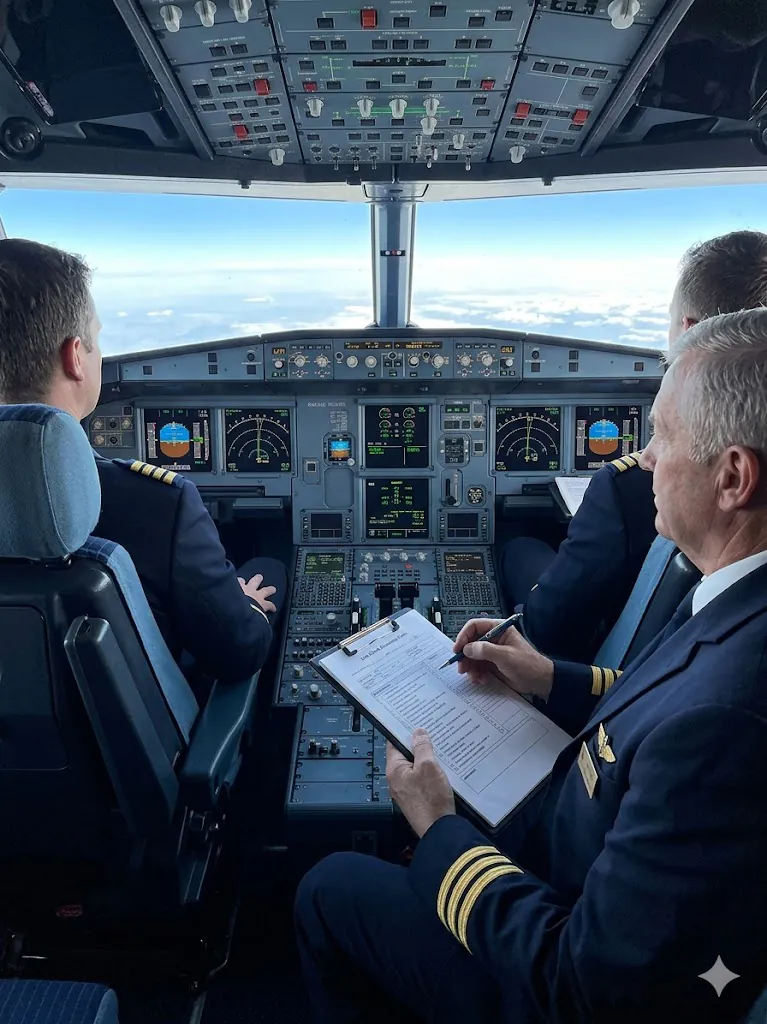
commercial operations, assessing not just technical skill but
crew resource management — how the two pilots communicate, divide
responsibilities, challenge each other’s decisions, and manage
workload under real operational pressure. CRM is the pilot
training that accident investigation data consistently identifies
as the highest-leverage safety intervention.
Crew Resource Management (CRM) is the component of pilot
training that addresses not what pilots do with the controls,
but how they communicate, make decisions, and manage human
performance limitations as a team. It was developed following
the analysis of CVR transcripts from multiple accidents in the
1970s and 1980s — including the Tenerife disaster I described
in my
runway incursion article—that revealed a consistent pattern:
technically competent crews making fatal errors because the
interpersonal dynamics of the cockpit prevented effective
communication or decision-making. The accidents were not
caused by pilots who did not know how to fly. They were caused
by pilots who did not effectively communicate, challenge
incorrect decisions, or manage authority gradients within
the crew.
CRM pilot training addresses the specific human factors
failure modes that accident data has identified as the most
common contributors to commercial aviation accidents: authority
gradient issues where junior crew members fail to challenge
incorrect captain decisions, fixation errors where one crew
member becomes focused on a single problem while the other
loses situational awareness, communication breakdown under
stress, and task saturation where high workload causes items
to be missed or procedures to be skipped. CRM training is
mandatory in initial pilot training and in recurrent training
throughout every pilot’s career. It is assessed in simulator
checks and line checks as an equal component of the proficiency
standard — a pilot who demonstrates excellent technical skill
but poor CRM in a simulator check will not pass the check.
The research base that underpins CRM is extensive: according
to the
SKYbrary CRM reference,
human factors — the category of errors that CRM training addresses’
contribute to approximately 70 to 80 percent of commercial
aviation accidents. CRM is the pilot training investment with
the highest safety return per hour of curriculum.
What Passengers Should Know About Pilot Training
The pilot flying you has been in training for their
entire career. Not just at the beginning — continuously.
The simulator check completed within the last 6 months assessed
the crew on emergency procedures, abnormal checklists, and
weather scenarios using the most current operational data.
The line check completed within the last year observed their
actual performance on commercial flights similar to yours.
The medical certificate renewed within the last 12 months
(or 6 months if over 40) confirmed their physiological fitness
to operate the aircraft. Pilot training is not a box ticked
at the beginning of a career; it is a cycle that continues
until the day of retirement.
The captain’s experience is not the only relevant
variable. A first officer with 3,000 hours who completed
their type rating 3 months ago has been through the same
qualification standards as a captain with 20,000 hours — the
difference is experience depth and the command authority
structure, not a fundamental difference in qualification
rigor. Both crew members are independently qualified, both
hold current medical certificates, and both are assessed
at the same 6-month simulator check interval. The two-pilot
system is designed with redundancy: if one crew member is
incapacitated, the other is independently qualified to manage
the aircraft and complete the flight. The pilot training
system is the reason the aviation safety statistics are what
they are:not luck, not aircraft engineering alone,
but a continuous qualification and assessment structure that
applies to every crew member on every commercial flight, every
day. For how all these safety systems connect to produce the
statistical safety record of commercial aviation, my
aviation safety article provides the complete statistical
context.
Related Reading from Aeruxo:
- Pilot Duty Time Explained: Why Crew Rest Rules Cause Delays
- Engine Failure on an Airplane: What a 15-Year Dispatcher Plans For
- How Crosswind Landings Work (Explained by a Flight Dispatcher)
Frequently Asked Questions
How long does pilot training take to become an airline
captain?
From first flight lesson to airline captain typically takes
10 to 20 years, depending on the training pathway, the airline’s
growth rate, and the pilot’s progression through the seniority
system. Reaching first officer position at a regional carrier
typically takes 5 to 7 years from initial training. The upgrade
from first officer to captain at a major airline requires
additional years in the seniority queue, a command upgrade
pilot training course, and a line qualification period flying
as captain under the supervision of a check captain. The total
flight hours at captain level at a major airline is typically
4,000 to 8,000 hours before the first command.
How many flight hours does a commercial airline pilot need?
The minimum for the Airline Transport Pilot Licence (ATPL)
is 1,500 hours under FAA regulations and a similar requirement
under ICAO standards. However, competitive entry requirements
for major airlines typically require 3,000 to 5,000 hours for
first officer positions, and 8,000 to 15,000 hours are common
at the captain level for wide-body international operations.
These hours represent years of pilot training in progressively
more complex aircraft and operations.
What is a Type Rating in pilot training?
A Type Rating is an aircraft-specific qualification that
authorizes a pilot to act as Pilot-in-Command or co-pilot on
a specific aircraft type — for example, the Boeing 737 or Airbus
A320. It requires completing a dedicated pilot training course
covering the aircraft’s systems, normal and emergency procedures,
and a simulator check conducted by an authority-designated
examiner. A pilot qualified on one aircraft type cannot legally
fly a different type without completing the specific type rating
pilot training for that aircraft.
How often do airline pilots train in the simulator?
Airline pilots complete a simulator training and checking
event at intervals no greater than every 6 months throughout
their entire career — a requirement mandated by ICAO standards
and national aviation authority regulations. Each event covers
normal operations, abnormal and emergency procedures, and
specific scenarios identified as the current training period’s
emphasis. Failing a simulator check grounds the pilot until
remedial training and a re-check are completed successfully.
A 40-year commercial pilot career involves a minimum of 80
simulator assessments.
What is a Class 1 medical certificate?
The Class 1 medical certificate is the occupational health
qualification required for commercial pilot operations. It
is assessed by an Aviation Medical Examiner designated by
the national aviation authority and covers cardiovascular,
neurological, visual, and psychological parameters. It must
be renewed annually for pilots under 40, and every 6 months
for pilots over 40. Any parameter that falls outside the defined
limits grounds the pilot pending specialist review or resolution’
regardless of the pilot’s experience level or operational
importance to the airline.
What is Crew Resource Management in pilot training?
Crew Resource Management (CRM) is the component of pilot
training that addresses communication, decision-making, and
human performance management within the flight crew. Developed
from accident investigation findings showing that human factors
contribute to approximately 70 to 80 percent of commercial
aviation accidents, CRM training covers authority gradient
management, communication protocols, task management under
stress, and challenge and response dynamics within the cockpit.
It is mandatory in initial and recurrent pilot training and
is assessed as an equal component of simulator and line checks’
a pilot who cannot demonstrate effective CRM will not pass
a proficiency assessment regardless of technical skill.
What does the dispatcher check about pilots before every
flight?
Before releasing any flight, the dispatcher verifies: current
type rating and proficiency check currency for the assigned
aircraft, valid Class 1 medical certificate for both crew
members, and route and aerodrome qualifications specific to
the flight’s destination and alternate. A single expired item’
even one day out of date — grounds the flight until a qualified
replacement crew is assigned. This verification happens on
every single dispatch, regardless of the crew’s experience
level or the operational impact of a delay.
Have you ever wondered about the training and qualifications
of the pilots flying you? Which aspect of pilot training
surprised you most? Share your thoughts in the comments’
passenger questions about crew qualifications are among the
most common and most underserved topics in aviation
communication.
Disclaimer: The views expressed in this article are my own
professional opinions based on 15+ years of operational experience.
They do not represent the official position of any airline, aviation
authority, or regulatory body.

Licensed Flight Dispatcher with 15+ years of experience in airline operations control. Holds FAA Aircraft Dispatcher Certificate and Republic of Korea Flight Dispatcher License (MOLIT). Specializes in flight watch, NOTAM analysis, flight planning, and operational control at a Korean LCC. IOSA audit participant and author of multiple airline operational manuals, including Emergency Response, De-icing, and OCC Procedures.