By Aeruxo — Licensed flight dispatcher (study guide) | 15+ Years in Airline
Operations
Three hours after the incident, the investigator called me.
“We need your ACARS logs, the fuel release data, the weather
briefing package, and the pre-departure communication records for
the flight. We need them within 24 hours.” I had already started
compiling the package before the call ended — 15 years of operational
experience teaches you that the documentation you prepare in the
first 24 hours after a serious incident either closes questions
or opens ones you do not want opened. The airplane black box
would tell investigators what happened inside the aircraft.
My documentation would tell them what happened before the crew
ever boarded. Together, they would reconstruct the complete
picture of everything that led to the event.
The airplane black box is the most talked-about piece of
aviation technology in the world and the least understood. Every
aviation accident news story mentions it. Every passenger has
heard of it. Almost no one knows what it actually records, how
it survives the crashes it is meant to document, how investigators
extract the data, or what the information looks like once it is
retrieved. After 15 years in airline operations — contributing to
incident documentation, receiving investigator requests for
operational records, and studying the findings that have come
from airplane black box analysis across decades of aviation safety
history — I want to explain what these devices are, what they contain,
and how investigators use them. Few safety tools have changed
commercial aviation more.
This article is based on operational experience and supported by international aviation safety standards and publicly available investigation data.
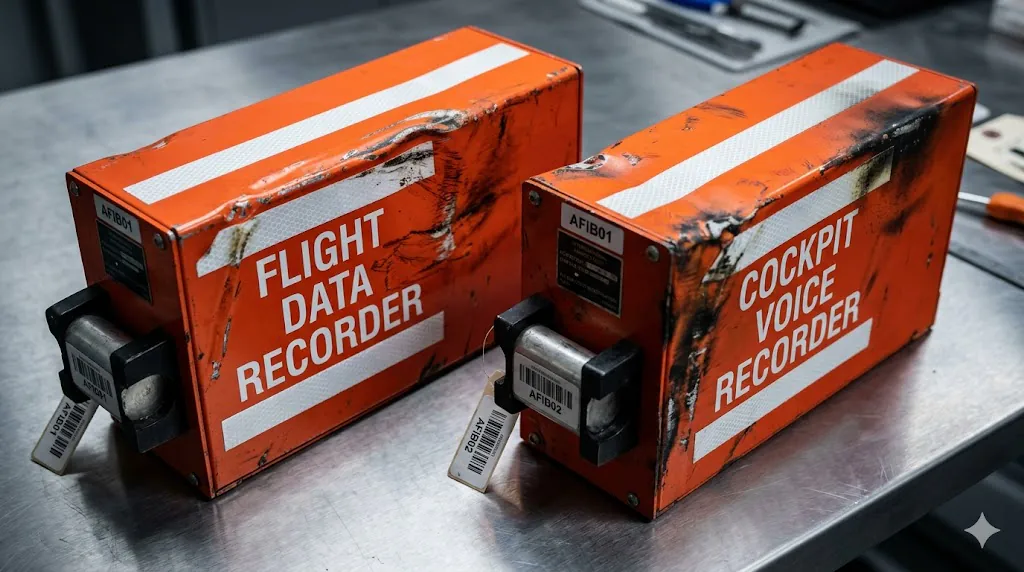
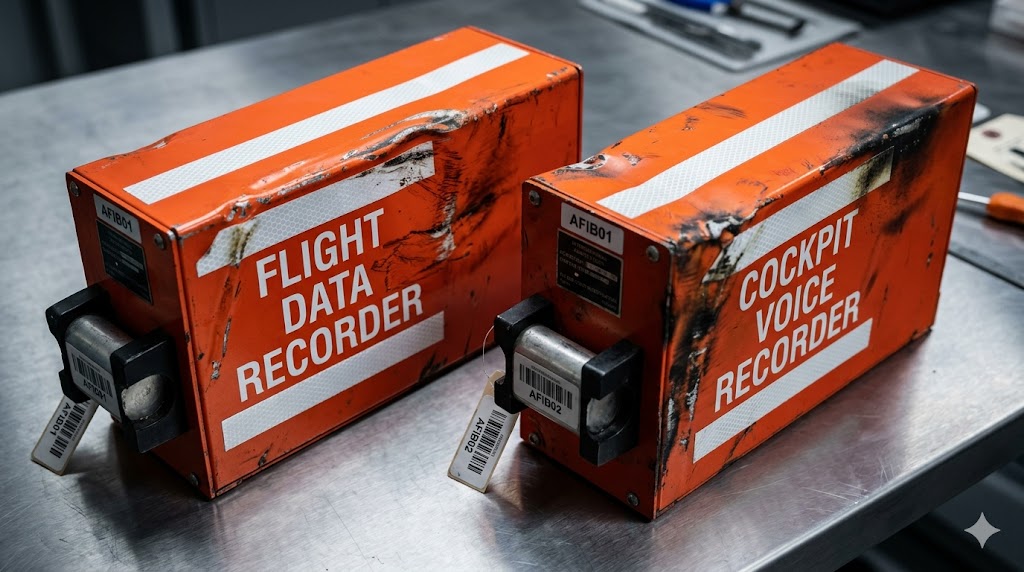
not black. The Flight Data Recorder captures hundreds of flight
parameters; the Cockpit Voice Recorder captures every sound in
the cockpit. Together they give investigators a complete record
of the final hours of any flight.
Three hours after one incident involving one of our aircraft,
an investigator called requesting my operational records:
the fuel release document, the weather package I had issued, the ACARS message log,
and the pre-departure communication records. I had anticipated the call
and already had the package prepared. What most people do not realize is
that the dispatcher’s records are among the first documents requested
in any serious investigation — because they establish the pre-flight
state of the operation. Was the weather briefing adequate?
Was the fuel uplift correct? Were there any anomalies in the ACARS data
that preceded the event? The black box captures what happened in the aircraft.
The dispatcher’s records capture what was known on the ground before it happened.
Together, they reconstruct the full operational picture.
Key Takeaways
- There is no single “black box”—there are two.
The Flight Data Recorder (FDR) captures hundreds of aircraft
parameters. The Cockpit Voice Recorder (CVR) captures all cockpit
audio. Both are mandatory on commercial aircraft and both are
required to survive defined crash conditions. - Airplane black boxes are bright international orange,
not black. The color maximizes visibility during search
operations. The name “black box” predates the color standardization
and has never been officially replaced in popular usage despite
being factually incorrect. - Modern black boxes must survive 3,400 G of impact
force, 1,100°C of fire for 60 minutes, and 6,000 metres of
water pressure:simultaneously, in sequence, in any
order. They are among the most mechanically robust objects
ever manufactured for a civilian application. - The underwater locator beacon (ULB) pings at 37.5 kHz
for 30 days after water immersion — enough time to coordinate
a search in most scenarios, though deep-ocean accidents like
Air France 447 and MH370 have tested those limits severely. - The data inside an airplane black box has directly
driven every major safety regulation in commercial aviation:
from GPWS to TCAS to wind shear detection — because it revealed
what was actually happening in aircraft before accidents that
no other source could explain.
1. The Two Recorders: What Each One Captures
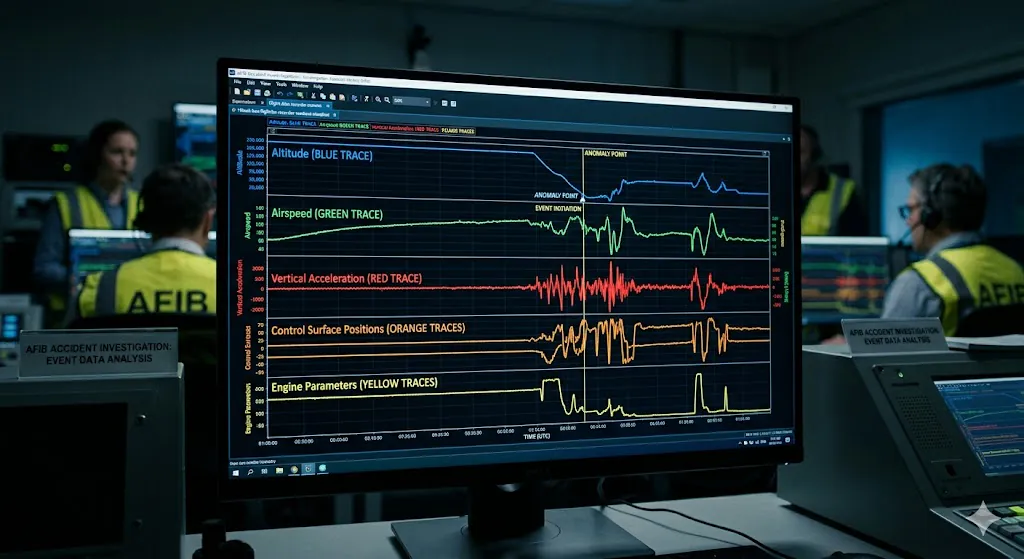
colored line represents a different parameter sampled continuously
throughout the flight. The anomaly visible in the middle of the
recording is the point where investigators begin their analysis’
working backward to find the initiating event.
The Flight Data Recorder (FDR) is required to
capture a minimum of 25 hours of flight data covering a minimum
parameter set defined by the relevant aviation authority — 88
parameters under FAA regulations, with modern aircraft typically
recording several hundred. These parameters include altitude,
airspeed, heading, vertical acceleration, pitch and roll attitude,
thrust lever position, flap and slat configuration, landing gear
status, control surface deflections, engine parameters, autopilot
and autothrottle engagement status, radio transmissions keyed,
and dozens of system status signals that collectively create a
complete second-by-second picture of what the aircraft was doing
throughout its flight. The FDR answers the question: what did the
aircraft do?
The Cockpit Voice Recorder (CVR) captures
the final two hours of audio from four channels: the captain’s
microphone, the first officer’s microphone, a cockpit area
microphone that picks up all cockpit sounds including alarms,
warnings, and environmental noise, and the flight intercom.
Everything said and heard in the cockpit during those two hours’
crew conversations, ATC communications, warning tones, engine
sounds, mechanical noises — is preserved on the CVR. The CVR
answers the question: what did the crew know, say, and hear?
Together, the FDR and CVR provide the complete flight crew and
aircraft perspective that investigators use to reconstruct any
event. What they do not capture is everything outside the
aircraft — weather, ATC ground communications, and operational
release data — which is why my documentation as dispatcher
becomes part of the investigation file alongside the airplane
black box data.
2. Why the Airplane Black Box Is Orange, Not Black
The name “black box” has no relationship to the device’s
appearance. The original flight recorders developed in the 1950s
and 1960s were housed in black metal cases — a practical choice
for early electronics enclosures with no particular significance.
As the safety value of recovering flight recorders from accident
sites became apparent, the color was changed to international
orange — the same high-visibility color used on life rafts, flight
suits, and maritime rescue equipment — to maximize the probability
of locating the units in wreckage debris fields, underwater, or
in remote terrain. The name “black box” persisted in public
usage because it had already embedded itself in popular language
before the color change became universal.
The bright orange color is paired with high-visibility
retroreflective tape and the underwater locator beacon (ULB)—
a device that activates automatically on water contact and emits
a 37.5 kHz acoustic ping detectable by hydrophone equipment at
ranges up to several kilometres in open water. The ULB continues
pinging for a minimum of 30 days before its battery depletes,
providing the acoustic search window that ocean floor search
teams use to narrow the search area from hundreds of square
kilometres to the specific zone where the airplane black box
has come to rest. The 30-day window has been sufficient in most
cases — but the 2009 Air France 447 investigation required two years
and three search missions before the recorders were recovered
from 3,900 metres of Atlantic Ocean floor, and the MH370 recorders
have never been found despite the longest and most expensive
aviation search in history.
3. How the Airplane Black Box Survives What the Aircraft Cannot
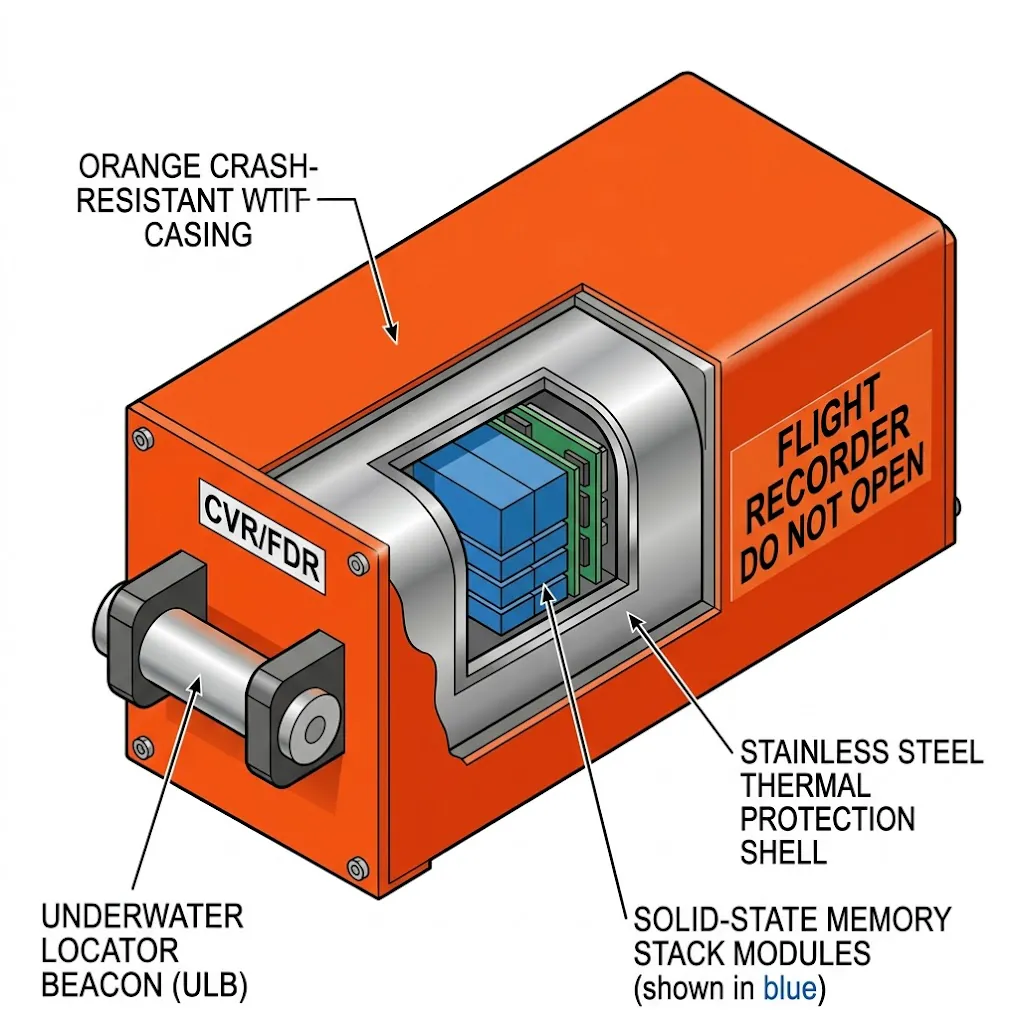
crash-resistant casing, inner stainless steel thermal protection
shell, and solid-state memory modules at the core. The layered
protection is designed to preserve the memory modules intact
through impacts, fire, and pressure that destroy everything
around them.
The survival specifications for an airplane black box are among
the most demanding for any civilian-manufactured device. The
memory module — the component that actually stores the data — must
survive a 3,400 G shock impact, equivalent to approximately 3,400
times the force of gravity applied instantaneously. It must
survive 1,100°C (2,012°F) of fire for 60 continuous minutes — a
temperature that melts aluminum, destroys most steel structures,
and exceeds the burn temperature of aviation fuel. It must survive
static crush pressure of 226 kg applied to any point on its
surface. It must survive immersion at 6,000 metres of water depth’
more than adequate for any known oceanic crash site except the
deepest ocean trenches. These tests are conducted independently
and in combination, because real accidents apply multiple stresses
simultaneously.
The structural solution is a three-layer architecture. The
solid-state memory modules are enclosed in a stainless steel
thermal protection shell filled with insulating material that
slows heat transfer during fire exposure. This assembly is enclosed
in the orange crash-resistant outer casing that absorbs impact
energy without transmitting it to the inner structure. Early
flight recorders used magnetic tape or wire — mechanisms that were
vulnerable to heat and mechanical damage. Modern airplane black
boxes use solid-state flash memory with no moving parts, far
higher data density, and significantly greater resistance to
mechanical shock than any recording medium that preceded them.
The result is a device that routinely survives accidents that
destroy the 300-tonne aircraft around it and is recovered intact
often enough that investigators expect it rather than hope for it.
4. How Investigators Extract and Analyse Black Box Data
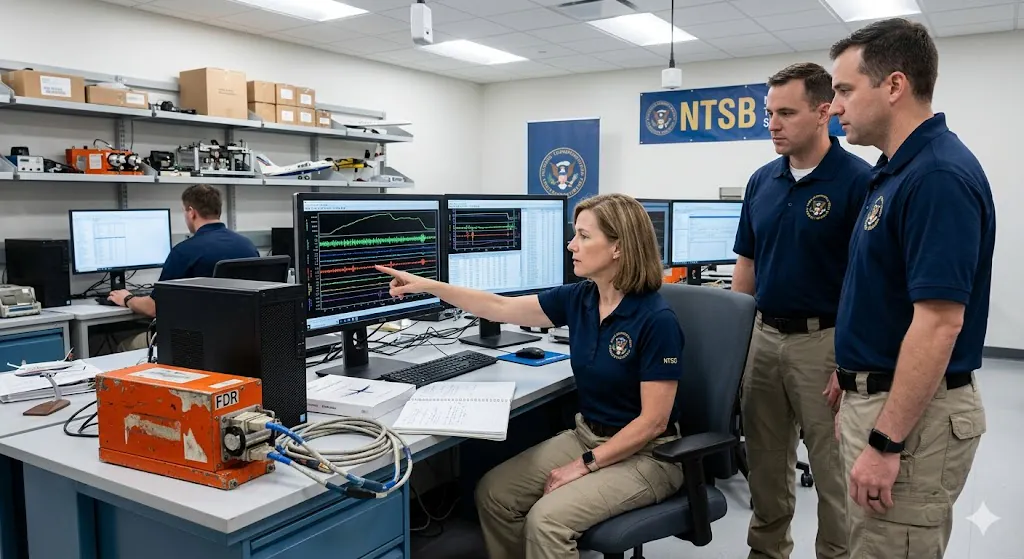
parameters and CVR audio are synchronized to a common time base
and rendered into the timeline that investigators use to reconstruct
the accident sequence. Every parameter anomaly is annotated,
correlated with the CVR audio, and cross-referenced with ATC
recordings and operational release data.
When an airplane black box is recovered from an accident site,
it is transported to the investigating authority’s laboratory’
the NTSB in the United States, the BEA in France, the JTSB in
Japan, or the equivalent body in the country of occurrence — for
data extraction. The outer casing is inspected and documented
before opening. The memory module is removed and connected to
a specialized readout system that extracts the raw data without
altering the original storage medium — maintaining the forensic
integrity of the original record for any subsequent legal or
regulatory proceedings.
FDR data is decoded using the aircraft’s specific data frame
definition — a map of which bits in the data stream correspond to
which parameters — and rendered into human-readable engineering
units: altitude in feet, airspeed in knots, acceleration in G.
The resulting parameter traces are synchronized to a common time
base and displayed as the multi-trace graph that investigators
use to reconstruct the event sequence. CVR audio is enhanced for
clarity and transcribed verbatim. The FDR traces and CVR transcript
are then synchronized — so investigators can read what the crew said
at the exact moment when a specific parameter showed an anomaly’
creating a combined record that is more informative than either
source alone. According to the
NTSB flight recorder factsheet,
the agency has used airplane black box data to identify causal
factors in virtually every major accident investigation it has
conducted since mandatory FDR installation became law in 1958.
5. How Airplane Black Box Data Has Changed Aviation Safety
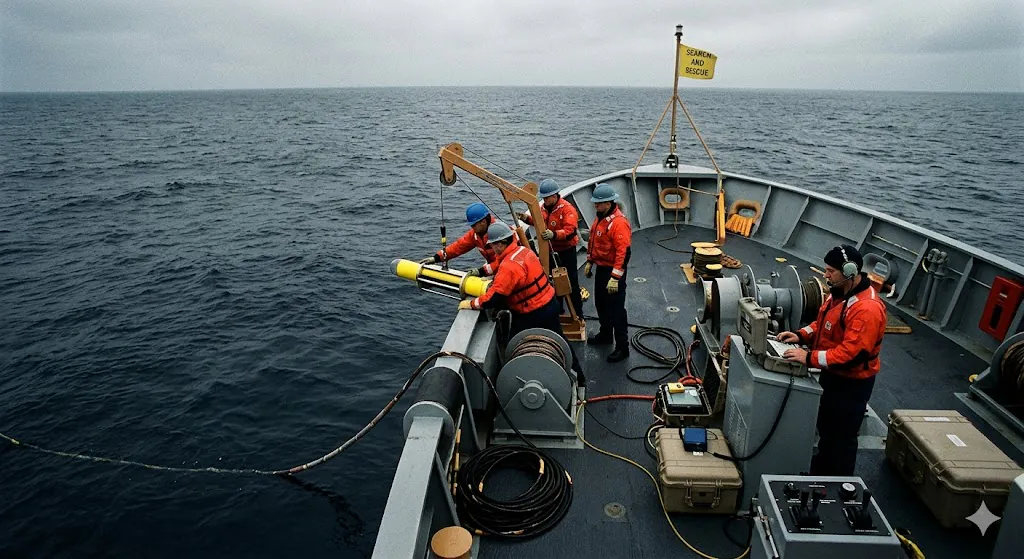
hydrophone array deployed from a search vessel listens for the
37.5 kHz ULB ping. In shallow water, recovery follows within days.
In deep ocean, the search can take months or years — and in the case
of MH370, remains incomplete.
The safety value of the airplane black box is not in the device
itself but in what analysis of its data reveals — and has revealed,
repeatedly, across the history of commercial aviation. GPWS
(Ground Proximity Warning System) was mandated after FDR
analysis of Controlled Flight Into Terrain (CFIT) accidents revealed
that crews were flying intact, fully functional aircraft into
mountains and the ground without any automated warning. The FDR
data showed no mechanical failure, no weather emergency, and no
crew incapacitation — just a steady, uninterrupted descent into
terrain that neither the crew nor any system had flagged.
TCAS and collision avoidance development was
driven in part by FDR data from near-miss events that revealed
how rapidly traffic conflicts developed at altitude and how little
time crews had to respond without automated advisory systems.
Wind shear detection systems:the LLWAS and
airborne predictive systems I described in my
wind shear article—were designed around the FDR data from
Delta 191 and other microburst accidents, which showed the precise
airspeed and altitude profile of the microburst encounter that
visual inspection of the wreckage alone could never have revealed.
The CVR has contributed equally transformative insights.
Crew Resource Management training was formalized
as a mandatory component of airline training after CVR transcripts
from multiple accidents revealed a consistent pattern: technically
competent crews making fatal errors because junior crew members
failed to effectively challenge incorrect decisions by senior
captains, or because communication broke down under pressure in
specific and predictable ways. The CVR transcripts did not show
crews who were negligent or untrained — they showed normal humans
with normal communication vulnerabilities in abnormal situations.
That finding drove an entirely new approach to training that
focuses on how crews communicate and make decisions together, not
just on individual technical skill. According to the
SKYbrary flight recorders reference,
the mandatory installation of flight recorders and the systematic
analysis of their data by independent safety investigation
authorities is considered one of the most consequential safety
interventions in commercial aviation history.
What the Dispatcher Contributes to an Airplane Black Box
Investigation
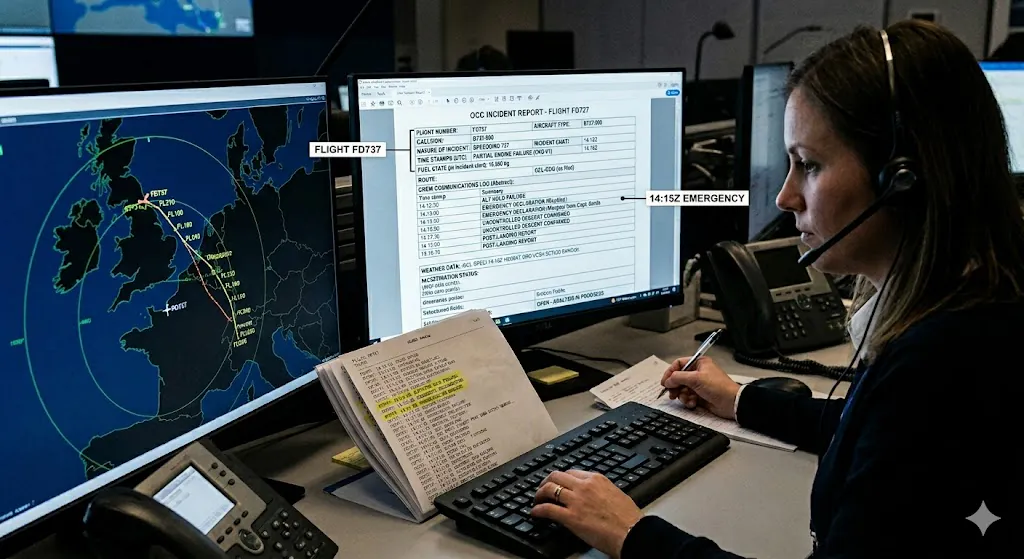
the airplane black box data with the pre-flight context the
recorders cannot capture: fuel planning, weather briefing,
operational release decisions, ACARS message logs, and the
timeline of every communication with the crew from release
to the event.
The airplane black box captures everything that happens from
engine start to the event. It does not capture what happened
before that — the pre-flight weather assessment, the fuel loading
decision, the operational release, the ACARS exchanges between
dispatch and the crew, or any of the pre-departure context that
investigators need to evaluate whether the flight was released
correctly into the conditions that led to the event. That context
comes from the dispatcher’s documentation package, which becomes
part of the investigation file alongside the recorder data.
When I receive a request from an investigation authority, I
compile a package that includes: the signed operational release
with fuel figures and alternate airports, the weather briefing
package issued to the crew before departure, all ACARS messages
sent and received during the flight, my fuel and performance
calculations for the flight, any NOTAMs or operational advisories
relevant to the route and destination, and a timestamped log of
every communication I had with the crew from release to the
event. This documentation is maintained for a minimum period
under regulatory record-keeping requirements precisely because
investigation requests can arrive months after a flight. Every
flight I release generates a documentation trail that could, in
a worst-case scenario, become part of an airplane black box
investigation file. That knowledge is part of why the quality
of pre-flight documentation matters as much as the quality of
the flight itself.
What Passengers Should Know About the Airplane Black Box
The airplane black box is why flying keeps getting safer.
Every regulation, every system improvement, and every training
program that has reduced aviation accident rates over the past
six decades was driven in part by data from flight recorders.
The device that documents accidents is also the device that
prevents the next one — because the safety findings from each
investigation are shared globally through the ICAO safety
recommendations system and applied fleet-wide before similar
conditions can produce similar outcomes.
The CVR’s two-hour recording window is a design
compromise. Historically, CVRs recorded over a two-hour
loop — meaning older recordings were overwritten after two hours
of operation. This meant that on long flights, the early portion
of the flight was not available to investigators. Modern CVRs
are required to capture a minimum of two hours on newer aircraft
types, with some operators voluntarily extending coverage. The
two-hour minimum is based on the observation that most accident-
initiating events occur within two hours of the critical phase,
but the design means that early flight decision-making on very
long flights may not be preserved. If your flight is
involved in an incident after a long ocean crossing, the dispatch
documentation I described above may be the only record of what
decisions were made before the CVR window begins.
This is not an abstract concern — it is the precise reason
dispatch record-keeping requirements exist alongside recorder
requirements, and why both are treated as equally important in
a serious investigation. For how all the safety systems on a
commercial aircraft work together in context, my
aviation safety article covers the statistical safety record
that these interconnected systems collectively produce.
Related Reading from Aeruxo:
- Emergency Landing Explained: What Really Happens and Why It’s Usually Safe
- Midair Collision Explained: How Aircraft Avoid Collisions in Flight
- Is Flying Safe? What Aviation Experts Know About Flight Safety
Frequently Asked Questions
What is an airplane black box?
An airplane black box is the collective name for two mandatory
flight recorders: the Flight Data Recorder (FDR) and the Cockpit
Voice Recorder (CVR). The FDR captures hundreds of aircraft
parameters — altitude, airspeed, control positions, engine data,
and system status — for a minimum of 25 flight hours. The CVR
captures all cockpit audio for the final two hours of flight.
Both units are housed in bright orange crash-resistant casings
and are required on all commercial aircraft above a defined
weight threshold.
Why is the black box orange, not black?
Flight recorders were originally housed in black metal casings
in the early development period, which is where the informal name
originated. The color was changed to international orange — maximum
visibility in debris fields, water, and remote terrain — as the
importance of rapid recovery became apparent. The name “black box”
has never been replaced in popular usage despite being factually
incorrect. The official designations are Flight Data Recorder
and Cockpit Voice Recorder.
What crash conditions must an airplane black box survive?
Flight recorders must survive 3,400 G of impact shock, 1,100°C
fire for 60 continuous minutes, 226 kg of static crush pressure
applied to any surface point, and immersion at 6,000 metres of
water pressure. These tests are conducted independently and in
combination. The solid-state memory modules at the core of modern
recorders routinely survive accidents that destroy the aircraft
around them, with recovery success rates high enough that
investigators expect intact data rather than hoping for it.
How long does the underwater locator beacon ping?
The Underwater Locator Beacon (ULB) on both recorders activates
automatically on water immersion and emits a 37.5 kHz acoustic
ping detectable by hydrophone equipment at distances of several
kilometres. The battery provides a minimum of 30 days of continuous
operation — sufficient for most ocean searches. Deep-ocean accidents,
such as Air France 447, have tested this window severely; the
AF447 recorders were not recovered until two years after the
accident, when the battery had long since depleted and the final
recovery used visual underwater search equipment rather than
acoustic detection.
What safety systems were designed using airplane black box
data?
Ground Proximity Warning System (GPWS) was mandated after FDR
analysis revealed that Controlled Flight Into Terrain was killing
crews in airworthy aircraft with no warnings. TCAS development
used near-miss FDR data to define the timing and response
parameters for automated collision avoidance. Wind shear detection
systems were designed around FDR recordings from microburst
accident events. Crew Resource Management training was developed
from CVR transcript analysis of communication patterns in accidents
involving technically competent but poorly coordinated crews.
Every major safety system in modern commercial aviation carries
the design influence of airplane black box findings.
Can passengers ever access airplane black box recordings?
No. FDR data and CVR transcripts are protected under aviation
safety investigation law in virtually all ICAO member states.
They may only be used by authorized safety investigation
authorities for accident investigation purposes and may not be
used in civil or criminal litigation except under specific
statutory exceptions. The protection exists specifically to
encourage candid cockpit communication by ensuring that CVR
recordings cannot be used against crew members in legal
proceedings — a policy balance between safety transparency and
individual legal protection that is regularly contested but
consistently maintained.
What does the dispatcher contribute to an airplane black box
investigation?
The dispatcher provides the pre-departure context that the
flight recorders do not capture: the operational release with
fuel and alternate planning, the weather briefing package, all
ACARS message logs, performance calculations, NOTAMs reviewed,
and a timestamped communication log. This documentation fills
the gap between what investigators can read from the recorders
and what they need to know about the decisions made before the
aircraft ever left the gate — including whether the flight was
correctly dispatched into the conditions that led to the event.
Have you ever wondered what is actually being recovered
when news reports say investigators found the black box? Now you
know exactly what those bright orange units contain — and why
finding them changes everything about an investigation. Share
your questions or observations in the comments.
Disclaimer: The views expressed in this article are my own
professional opinions based on 15+ years of operational experience.
They do not represent the official position of any airline, aviation
authority, or regulatory body.

Licensed Flight Dispatcher with 15+ years of experience in airline operations control. Holds FAA Aircraft Dispatcher Certificate and Republic of Korea Flight Dispatcher License (MOLIT). Specializes in flight watch, NOTAM analysis, flight planning, and operational control at a Korean LCC. IOSA audit participant and author of multiple airline operational manuals, including Emergency Response, De-icing, and OCC Procedures.