By Aeruxo — Licensed Flight Dispatcher | 15+ Years in Airline Operations
A few months ago, a friend called me the night before her flight to Tokyo. She had seen a news report about a plane crash somewhere in the world, and she was terrified. “Be honest with me,” she said. “Is flying safe? Like, actually safe? You work in this industry—tell me the truth.”
I get this question a lot. At dinner parties, family gatherings, casual conversations—when people learn that I am a flight dispatcher who has spent over 15 years in an airline Operations Control Center, they want to know: is it really safe up there?
This article is my honest, complete answer. Not the marketing version from an airline PR department. Not the panic-driven version from a news headline. The real answer, from someone who has spent his entire career making the decisions that keep aircraft flying safely—and who would not hesitate to put his own family on any flight I dispatch.
Key Takeaways
- Flying is the safest form of long-distance transportation by every measurable metric. Your odds of being in a fatal plane crash are approximately 1 in 11 million flights.
- The aviation industry learned from every accident in history and built those lessons into regulations, training, and aircraft design. The system does not just react to failures—it anticipates and prevents them.
- Modern commercial aircraft have redundancy in every critical system—dual engines, triple flight computers, backup hydraulics, multiple electrical generators. A single failure almost never compromises the flight.
- Your flight is monitored by multiple layers of human expertise: pilots in the cockpit, air traffic controllers in the sky, and a flight dispatcher on the ground who shares legal responsibility for your safety.
- Fear of flying is normal and understandable—but it is driven by psychology, not statistics. Understanding what actually protects you can transform anxiety into confidence.
1. The Numbers: How Safe Is Flying, Really?
The first question anyone asks is simple: is flying safe? Let me start with the facts, because facts are the best antidote to fear.
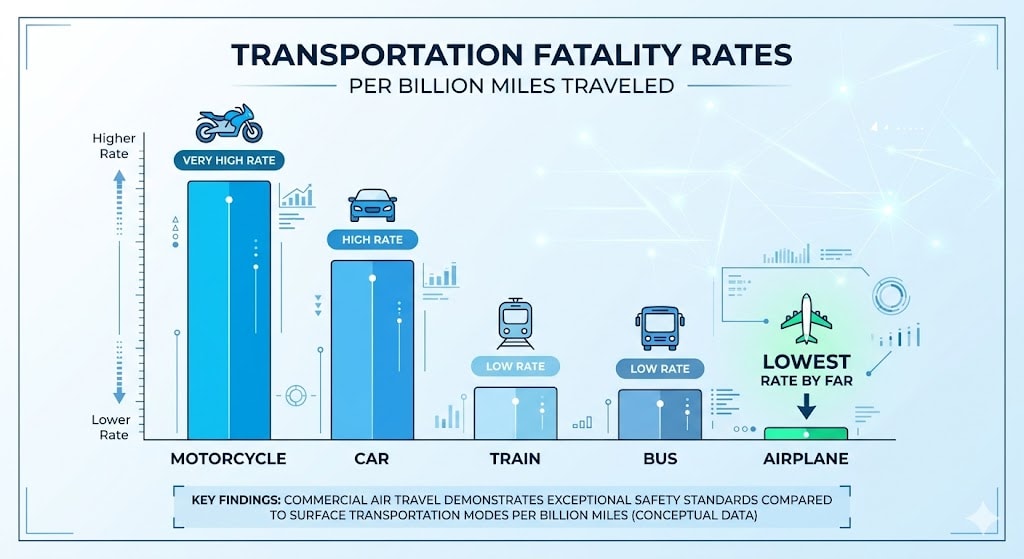
According to IATA’s 2026 Safety Report covering 2025 operations, the global commercial aviation industry operated approximately 38.7 million flights and safely transported more than 5 billion passengers. There were 3 fatal accidents. That translates to roughly 1 fatal accident per 5.6 million flights.
To put that in perspective: if you took one flight every single day, statistically it would take you over 15,000 years before you would be involved in a fatal accident. You would need to fly daily from the Stone Age until now—and then keep flying for another 10,000 years.
Compare that to driving. According to the U.S. National Safety Council, your odds of dying in a car accident over a lifetime are approximately 1 in 102. For commercial aviation, the comparable figure is approximately 1 in 205,552. You are roughly 2,000 times safer in a commercial aircraft than in a car.
But here is what most “is flying safe” articles do not tell you: these numbers are not static. They are improving. Between 2012-2016, the global fatal accident rate was approximately 1 per 3.5 million flights. By 2021-2025, that rate had improved to 1 per 5.6 million flights. Aviation is not just safe—it is getting safer every year, even as the number of flights grows. For the authoritative industry data, the IATA Safety Report publishes annual global aviation safety statistics.
So why does flying feel so dangerous? Because of how our brains process risk. A car accident kills one or two people and appears briefly in local news. A plane crash—which is extraordinarily rare—kills dozens or hundreds and dominates global news for weeks. Our brains are wired to assess risk based on the vividness of the threat, not the probability. Psychologists call this the “availability heuristic.” It makes us wildly overestimate the danger of flying and underestimate the danger of driving.
2. Why Is Flying So Safe? The Layers That Protect You
Aviation safety is not the result of any single system. It is the product of multiple independent layers of protection, each designed to catch the failures that the other layers miss. In the safety profession, this is called the “Swiss cheese model”—each layer has holes, but when you stack enough layers together, the holes never align.
Let me walk you through the layers that protect you on every flight, because understanding them will fundamentally change how you feel about flying.
2.1 Aircraft Design: Built to Survive
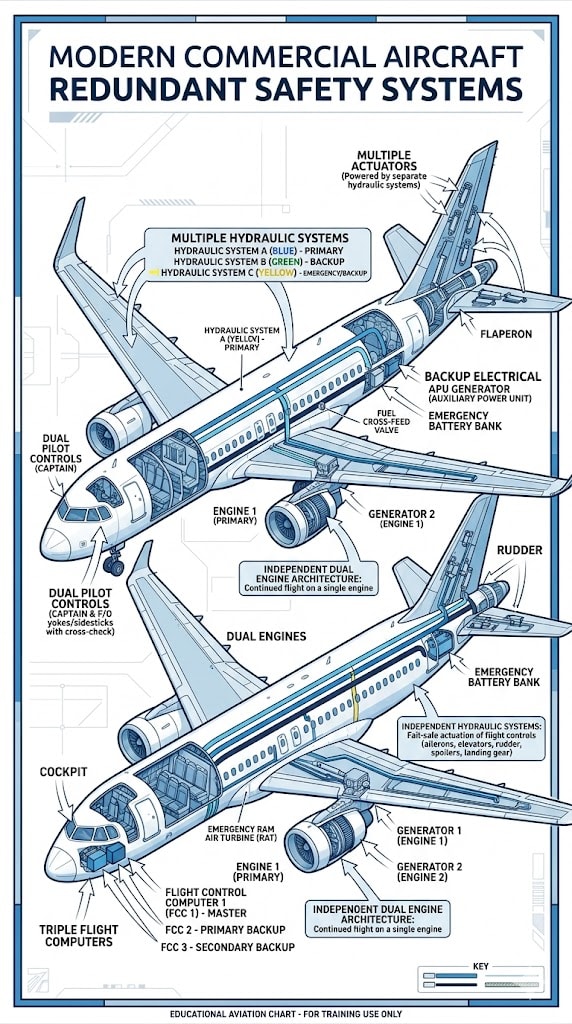
Modern commercial aircraft are engineered with a philosophy that assumes things will break—and builds in backups for when they do.
Dual engines, independent systems. A twin-engine aircraft like the Boeing 737 or Airbus A320 can fly perfectly safely on one engine. Pilots train for this scenario regularly, and I plan for it in every flight plan I build. Engine failures are extraordinarily rare (roughly 1 per 100,000 flight hours), and even when they occur, the aircraft lands safely on the remaining engine in virtually every case.
Triple-redundant flight computers. The fly-by-wire systems in modern aircraft use three independent flight computers that continuously cross-check each other. If one produces an erroneous output, the other two override it. For one computer to fail is rare; for all three to fail simultaneously is essentially impossible.
Multiple hydraulic systems. Aircraft have two or three independent hydraulic systems to power flight controls, landing gear, and brakes. If one system fails—even if two fail—the remaining system can still safely control the aircraft.
Structural over-engineering. As I discussed in my article on turbulence, aircraft wings are tested to flex over 7 meters upward without breaking. The airframe is certified to withstand 150% of the maximum load it could ever encounter. The engineering margins are enormous.
The philosophy behind all of this is simple: no single failure should ever be catastrophic. Every critical system has a backup, and every backup has a backup. This is why, when you read about an aircraft landing safely after an engine failure or a hydraulic loss, it is not a miracle—it is the system working exactly as designed.
2.2 Pilot Training: Prepared for the Worst
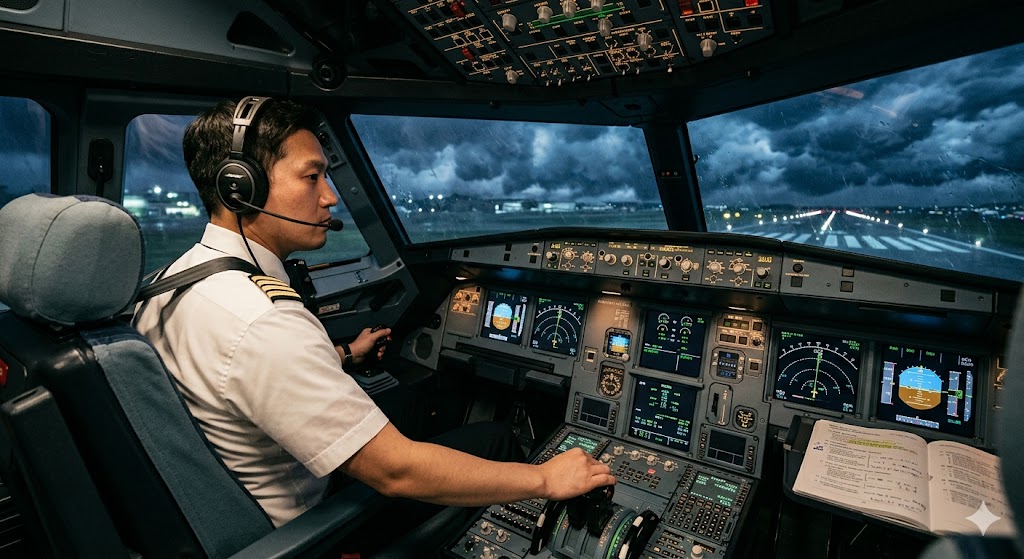
Commercial airline pilots undergo some of the most rigorous training of any profession in the world. Before a pilot sits in the captain’s seat of a commercial airliner, they have typically accumulated thousands of flight hours, passed multiple written and practical examinations, and completed extensive type-specific training on the exact aircraft they will fly.
But what makes pilot training truly exceptional is the recurrent training. Every six months (in most regulatory frameworks), pilots must return to the simulator and demonstrate their ability to handle emergency scenarios: engine failures at the worst possible moment (during takeoff), complete electrical failures, hydraulic malfunctions, severe weather encounters, cabin depressurization, and more. If a pilot fails to meet standards during recurrent checks, they do not fly until they pass.
I have briefed thousands of pilots over my career. The level of professionalism, preparedness, and calm competence I encounter is consistently impressive. The image of the panicking pilot from disaster movies bears no resemblance to reality. These are trained professionals who have practiced every emergency scenario dozens of times before they ever encounter one for real.
2.3 The Flight Dispatcher: Your Safety Net on the Ground
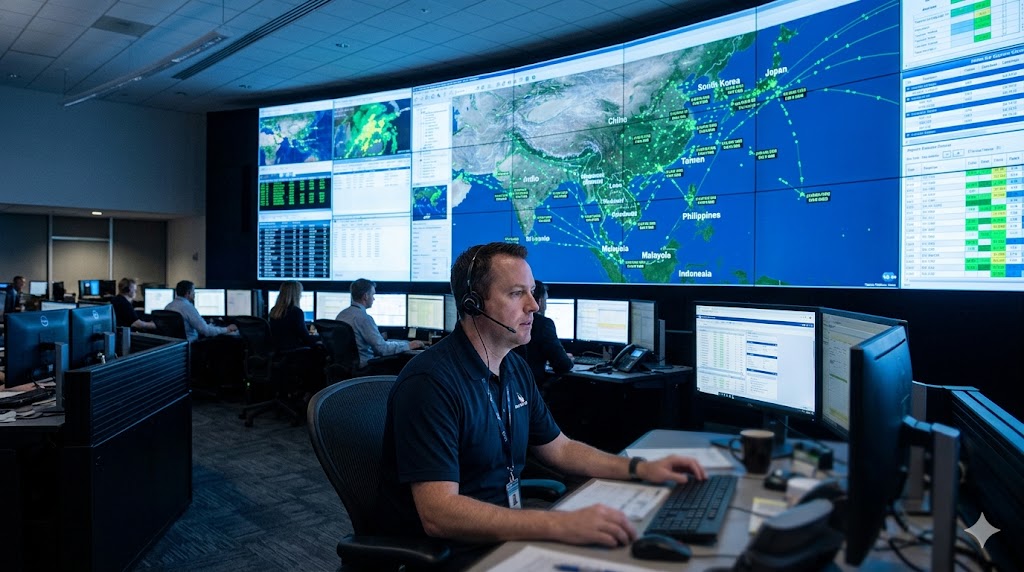
This is the layer most passengers do not know exists—and it is the one I can speak to most personally.
Before every commercial flight, a flight dispatcher builds a complete flight plan that accounts for weather, fuel, aircraft performance, alternate airports, and dozens of other variables. Both the dispatcher and the Captain must agree on the plan before the flight departs. During the flight, the dispatcher monitors conditions and communicates with the crew if anything changes.
I am not just watching. I am actively managing risk. If weather deteriorates along the route, I send updated information to the cockpit. If a new SIGMET is issued for turbulence or thunderstorms, I propose altitude changes or route deviations. If the destination airport closes unexpectedly, I have already identified the best diversion option and communicated it to the crew.
Think of it this way: when you are on a flight, there are at least two pilots in the cockpit, air traffic controllers managing the airspace, and a flight dispatcher in the OCC who has your flight on their screen and is watching over it from pushback to arrival. You are never alone up there.
2.4 Air Traffic Control: Invisible Guardians
Air traffic controllers manage the safe separation and sequencing of aircraft across the world’s airspace, 24 hours a day. They ensure that no two aircraft are ever dangerously close to each other, they guide aircraft through busy terminal airspace, and they provide pilots with critical weather and traffic information.
The ATC system has multiple built-in safety nets, including radar-based conflict detection systems (TCAS) that automatically alert pilots when aircraft are getting too close—even if ATC makes an error. Modern TCAS systems can independently command one aircraft to climb and another to descend, resolving potential conflicts without any human input.
2.5 Regulations and Oversight
Aviation is one of the most heavily regulated industries in the world. Every aircraft, every airline, every pilot, every mechanic, and every dispatcher operates under a strict regulatory framework set by authorities like the FAA, EASA, and national aviation agencies aligned with ICAO standards.
These regulations cover everything—aircraft design and manufacturing standards, maintenance schedules, pilot training requirements, crew rest rules, operational procedures, and safety reporting systems. Airlines are subject to regular audits and inspections. Non-compliance can result in fines, suspension of operations, or loss of operating certificates.
But perhaps the most important safety mechanism in aviation is the accident investigation system. When an accident or serious incident occurs, independent investigation boards (like the NTSB in the United States or the ARAIB in Korea) conduct exhaustive investigations to determine the cause and issue safety recommendations. These recommendations are typically implemented across the entire industry—meaning that every accident, however tragic, makes flying safer for everyone who comes after. SKYbrary’s Safety Management System overview explains the regulatory framework that underpins all commercial aviation operations.
3. Addressing Your Specific Fears Honestly
I want to address the most common fears I hear from friends, family, and passengers—not with dismissive platitudes, but with honest answers from someone who manages these exact scenarios every day.
“What if the engines fail?”
Both engines failing simultaneously on a modern commercial jet is extraordinarily rare—so rare that most pilots will never experience it in their entire career. A single engine failure is itself very uncommon (roughly 1 in 100,000 flight hours), and the aircraft is fully capable of flying, climbing, and landing safely on one engine. Pilots train for single-engine operations every six months in the simulator. I build every flight plan to ensure the aircraft can safely complete the flight on one engine. If you are on one of my flights and an engine fails, the plan for that scenario already exists. It was built before you boarded.
“What if we hit severe turbulence?”
I wrote an entire detailed article on turbulence. The short version: turbulence cannot cause a commercial aircraft to crash. The aircraft is engineered to withstand forces far beyond anything the atmosphere can produce. Turbulence can cause injuries to unrestrained passengers—which is exactly why you should always keep your seatbelt fastened when seated—but the aircraft itself is never in structural danger.
“What if the pilot makes a mistake?”
Pilots are human, and humans make mistakes. But modern aviation is designed around this reality. Crew Resource Management (CRM) ensures that two pilots cross-check each other’s decisions. Automated systems provide warnings and protections against dangerous inputs. Standard Operating Procedures (SOPs) create consistent, predictable cockpit workflows that minimize the chance of error. And the flight dispatcher provides an additional layer of independent oversight from the ground.
The aviation industry has not eliminated human error—that is impossible. What it has done is build a system where a single error almost never leads to a catastrophic outcome. It takes a chain of multiple failures, all aligning simultaneously, for a serious accident to occur. And the entire industry works continuously to prevent those chains from forming.
“What if there is a mechanical problem mid-flight?”
Aircraft systems are monitored continuously during flight. If a problem develops, the crew detects it through warning systems, alerts, and instrument indications—usually long before it becomes serious. The vast majority of mechanical issues in flight are managed by the crew using established procedures and result in routine landings, sometimes at a diversion airport as a precaution.
From my desk, I have managed in-flight mechanical situations ranging from minor (a cabin lighting malfunction) to significant (a hydraulic system caution). In every single case, the crew handled the situation professionally, the aircraft landed safely, and the passengers were never in danger. That is not luck—it is the system working as designed.
“But I just saw a plane crash on the news…”
I understand. When a plane crash makes the news, it dominates coverage for days. The images are horrifying. The stories are heartbreaking. And for a few days, it feels like flying is incredibly dangerous.
But consider this: on the day that crash occurred, approximately 100,000 other commercial flights took off and landed safely around the world. Those flights carried millions of passengers to their destinations without incident. None of them made the news, because “plane lands safely” is not a story.
The intense media coverage of rare aviation accidents creates a profoundly distorted perception of risk. You are seeing the exception—the 1-in-5.6-million event—and your brain is treating it as the norm. This is completely natural. But it is not rational, and recognizing this can help you separate emotion from evidence.
4. What I Want Nervous Flyers to Know from My 15 Years
I have been dispatching flights for over 15 years at a Korean LCC operating across Japan, China, and Southeast Asia. In that time, I have planned and monitored tens of thousands of flights. I have dealt with typhoons, volcanic ash, severe turbulence, medical emergencies, mechanical issues, and every kind of delay and disruption imaginable.
Here is what that experience has taught me:
The system has extraordinary depth. What passengers see is the tip of the iceberg. Behind every flight is a massive, invisible infrastructure of planning, monitoring, training, maintenance, regulation, and coordination. When something goes wrong—and things do go wrong—there are multiple independent systems designed to catch it, contain it, and resolve it safely.
Every person in the chain takes safety personally. In 15 years, I have never encountered a pilot, dispatcher, controller, or maintenance engineer who treated safety casually. Not once. When I sign a dispatch release, I am putting my professional judgment—and my license—on the line. That is a powerful motivator for thoroughness.
The small stuff gets caught. What frightens most people is the idea of a hidden flaw—something nobody noticed that causes a catastrophe. But the system is specifically designed to catch small problems before they become big ones. Pilots do pre-flight inspections. Maintenance engineers run scheduled checks. Dispatchers analyze weather and aircraft performance. ATC monitors separation. Each of these independent checks creates another opportunity to catch a problem early.
I fly regularly, and I have zero anxiety about it. I have put my family on flights that I dispatched. I fly on my own airline and on other airlines without a second thought. I know exactly what can go wrong—I deal with it professionally every day—and that knowledge makes me more confident, not less. When you understand the full picture of what protects you, flying stops being scary and starts being remarkable.

5. Practical Tips for Anxious Flyers
If you are reading this as someone who genuinely struggles with fear of flying, I want to give you some practical, honest advice—not from a therapist (I am not qualified for that), but from someone who understands the operational side of what you are afraid of.
Book a morning flight. Morning flights have the highest on-time performance, the smoothest weather conditions (convective turbulence builds in the afternoon), and fresh, well-rested crews. If minimizing variables makes you feel safer, mornings are your best bet.
Sit over the wings. The center of the aircraft, near the wings, experiences the least motion during turbulence. If bumps are your primary anxiety trigger, this seating position will give you the smoothest ride.
Learn what the sounds mean. A lot of in-flight anxiety comes from unfamiliar sounds—the landing gear retracting, the flaps moving, the engines changing power, the hydraulic pumps cycling. These are all completely normal. The “thunk” you hear after takeoff is the landing gear folding into its bay. The change in engine sound during descent is a normal power reduction. The cabin pressurization system makes a subtle hissing sound throughout the flight. All normal.
Turbulence is uncomfortable, not dangerous. I cannot stress this enough. When the aircraft bumps and shakes, the structure is handling forces that are a tiny fraction of what it is designed to withstand. Keep your seatbelt on, take a slow breath, and remember: the aircraft is not in danger. You are experiencing the atmospheric equivalent of a bumpy road.
Talk to a professional if your fear is severe. If fear of flying significantly impacts your life—if you avoid flights entirely, or if you experience panic attacks during flights—consider speaking with a therapist who specializes in anxiety disorders. Cognitive Behavioral Therapy (CBT) has an excellent track record for treating aviophobia. There is no shame in seeking help for a fear that affects an estimated 20-40% of adults to some degree.
6. Conclusion: The Safest Journey You Will Take Today
Let me return to where I started—my friend’s phone call the night before her Tokyo flight.
I told her what I have told you in this article. I gave her the statistics. I explained the layers of protection. I described what I do in the OCC to keep flights safe. And then I said something that I genuinely believe: “The drive to the airport is the most dangerous part of your trip.”
She flew to Tokyo the next day. She texted me when she landed: “Smooth flight. I actually relaxed for part of it. Thanks.”
That text made my day. Not because I told her something she wanted to hear, but because I told her the truth. Flying is safe. Not perfectly safe—nothing in life is. But extraordinarily, remarkably, consistently safe, to a degree that most people do not appreciate until they look at the actual data and understand the actual systems that make it so.
Every time I sign a dispatch release, I am affirming that I have done everything in my power to ensure this flight will arrive safely. After 15 years and tens of thousands of flights, every single one has. The pilots, the controllers, the engineers, the regulators, and the dispatchers—all of us are working together, every day, on every flight, to keep that record intact.
So yes. Flying is safe. Get on the plane. See the world. You are in good hands.
Learn more about our mission and operational background on the About Aeruxo page.
Frequently Asked Questions
What are the actual odds of dying in a plane crash?
According to the most recent IATA and NTSB data, the odds of being involved in a fatal commercial aviation accident are approximately 1 in 11 million flights. Your lifetime odds of dying in a plane crash are approximately 1 in 205,552, compared to 1 in 102 for a car accident. By every measurable metric, commercial flying is the safest form of long-distance transportation available.
Is flying getting more dangerous because of recent crashes?
No. While high-profile crashes in 2024 and 2025 generated significant media attention, the long-term trend is clearly toward increased safety. The fatal accident rate per million flights has improved from roughly 1 per 3.5 million flights (2012-2016) to approximately 1 per 5.6 million flights (2021-2025). Each accident is thoroughly investigated and leads to safety improvements across the entire industry. Aviation does not just maintain its safety record—it actively improves it, year after year.
Are low-cost carriers less safe than full-service airlines?
No. All commercial airlines—whether low-cost or full-service—are subject to the same safety regulations, aircraft certification standards, pilot training requirements, and maintenance protocols. The differences between LCCs and full-service carriers are in service levels (seat pitch, meals, lounges), not in safety standards. As a dispatcher at a Korean LCC, I can confirm that the safety procedures, training, and regulatory oversight are identical to those at any major full-service airline.
What is the safest seat on a plane?
From a pure crash survivability perspective, some studies suggest that seats near the rear of the aircraft have slightly higher survival rates in certain types of accidents. However, the differences are small and depend heavily on the specific circumstances of each accident. From a comfort perspective during turbulence, seats over the wings experience the least motion. Ultimately, the safest thing you can do on any flight is keep your seatbelt fastened at all times while seated—regardless of which seat you are in.
Should I be worried about flying during typhoon season?
Not about the safety of the flight itself. Airlines will cancel or reroute flights to avoid typhoons—no pilot or dispatcher will fly through one. The risk during typhoon season is operational disruption: delays, cancellations, and diversions. Build flexibility into your travel plans during typhoon season (June-November) for East and Southeast Asian destinations, and always have travel insurance. But do not worry about the aircraft flying into a typhoon—that will not happen.
How can I overcome my fear of flying?
Education is the most powerful tool. Understanding what protects you—the engineering redundancy, the pilot training, the dispatch system, the ATC network—makes the experience far less frightening. Many people find that learning the “why” behind every sound and sensation on a flight (engine noise changes, landing gear sounds, turbulence bumps) significantly reduces their anxiety. For severe fear of flying, Cognitive Behavioral Therapy (CBT) with a therapist experienced in aviophobia has an excellent success rate. You do not have to live with this fear.
Do you have a question about aviation safety? Leave a comment below—I will answer honestly from my 15 years of operational experience.
Disclaimer: The views expressed in this article are my own professional opinions based on 15+ years of operational experience and publicly available safety data. They do not represent the official position of any airline, aviation authority, or regulatory body. If you experience severe anxiety related to flying, please consult a qualified mental health professional.