By Aeruxo — Licensed Flight Dispatcher | 15+ Years in Airline Operations
You are sitting at the gate. Your boarding time was 10 minutes ago. The screen flickers. “DELAYED — New departure time: to be confirmed.” No explanation. No one at the counter seems to know anything. The passenger next to you mutters, “Typical.”
I have been on the other side of that screen for over 15 years. As a flight dispatcher at a Korean low-cost carrier, I am often the person who causes your flight delay—or more accurately, the person who makes the call that your flight cannot safely or legally depart on time. And I can tell you: there is always a reason. The airline is just terrible at explaining it to you.
This article is my attempt to fix that. I am going to walk you through every major category of flight delay, explain what is actually happening behind the scenes, and share the real stories from my desk that illustrate why delays happen the way they do. Some of these reasons will surprise you. Some will frustrate you. But all of them will make your next delay at least a little more understandable.
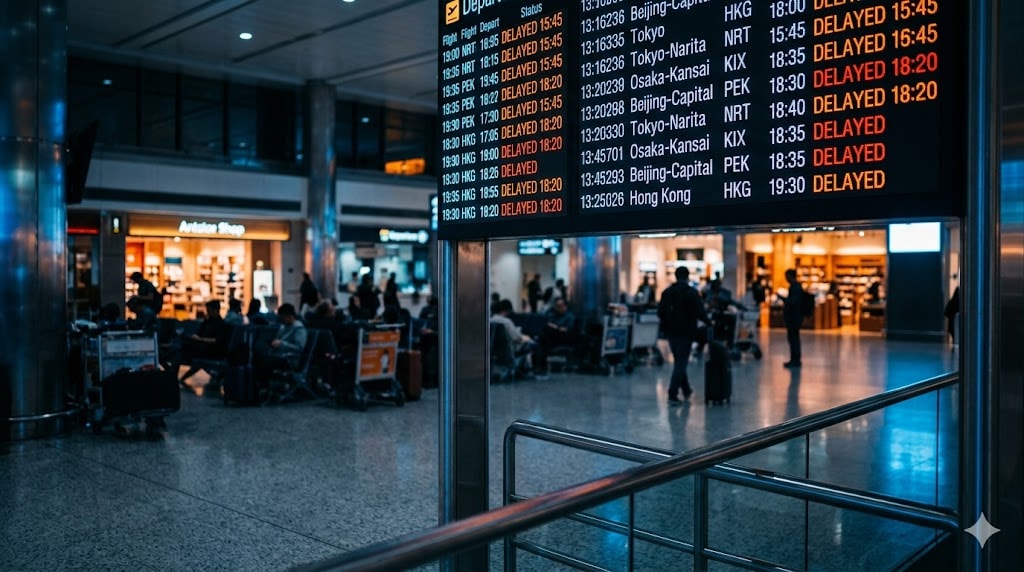
Key Takeaways
- Weather is the most common cause of flight delays, but not in the way you think. The sky above your airport can be perfectly clear while your flight is delayed because of a storm 2,000 km away.
- The “domino effect” causes more delays than any single event. One aircraft flies 4-6 routes per day. A 90-minute delay on the first flight cascades through every subsequent flight on that aircraft’s schedule.
- Maintenance delays protect you. When a pilot or engineer finds something wrong, the flight does not go until it is fixed. This is never negotiable, and it is the one delay you should be grateful for.
- “Operational reasons” is not a cover-up—it is an umbrella term for complex situations that do not fit neatly into a single category, like crew duty limits intersecting with aircraft swaps during weather recovery.
- LCC operations are especially vulnerable to cascading delays because low-cost carriers run tighter aircraft rotations with fewer spare aircraft, leaving less buffer to absorb disruptions.
1. Weather: It Is Not Always About the Sky Above Your Head
This is the delay that passengers argue about the most. “But the weather here is fine!” I have heard that sentence a thousand times, relayed through gate agents to the OCC. And the passenger is usually right—the weather at their airport is fine. The problem is somewhere else entirely.
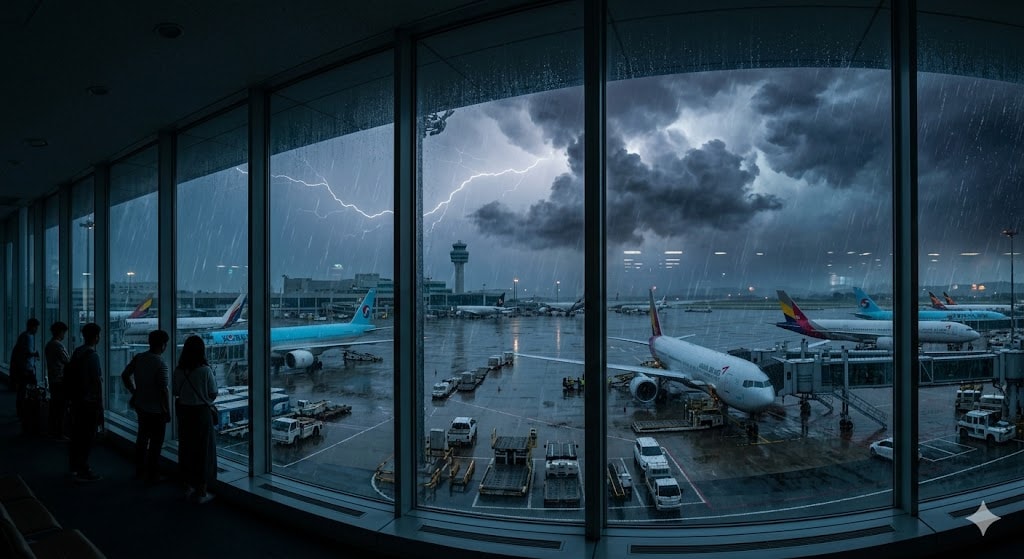
A flight delay due to weather can be triggered by conditions in at least four different places:
At the destination. Your Incheon-to-Bangkok flight is ready to go. The weather in Seoul is gorgeous. But Bangkok Suvarnabhumi is experiencing a monsoon downpour with 3 km visibility and thunderstorms on the approach path. I cannot release a flight to a destination where the forecast shows conditions below our required minimums during the expected arrival window. We wait for the weather to improve, or I re-plan with extra fuel for holding and a diversion-capable alternate.
Along the route. A massive line of thunderstorms stretching across the South China Sea will force your flight to deviate hundreds of miles. That deviation burns more fuel, which means I may need to reduce payload or add a fuel stop. Or the deviation adds enough time that the crew will exceed their duty limits. Any of these can delay or cancel the flight.
At the aircraft’s previous airport. This is the one passengers never think about. Your aircraft is currently in Osaka. A snowstorm hits Kansai, delaying its departure by two hours. That aircraft was supposed to fly Osaka → Incheon → Da Nang today. The Osaka delay means it arrives in Incheon two hours late, which means your Da Nang flight departs two hours late. The weather in Incheon and Da Nang is perfect. But the snow in Osaka—a city you are not even flying to—just delayed your flight.
At a completely unrelated airport that affects the air traffic system. During typhoon season, when a major storm hits Manila or Taipei, the entire regional ATC system adjusts. Flow control measures slow down departures and arrivals across multiple airports. Your Incheon-to-Fukuoka flight might be delayed because ATC is managing the ripple effect of reduced capacity at airports you have never heard of.
From my desk in the OCC, weather delays are the most intellectually demanding to manage because the situation changes continuously. I might authorize a flight to depart expecting the destination weather to improve by arrival time—only to watch the forecast deteriorate during the flight, requiring me to send ACARS updates to the crew with revised alternate options. My previous article on flight planning covers this real-time monitoring process in detail.
2. The Domino Effect: One Delay, Five Flights Ruined
This is the single most common source of delays at any airline, and it is the one that passengers understand the least.
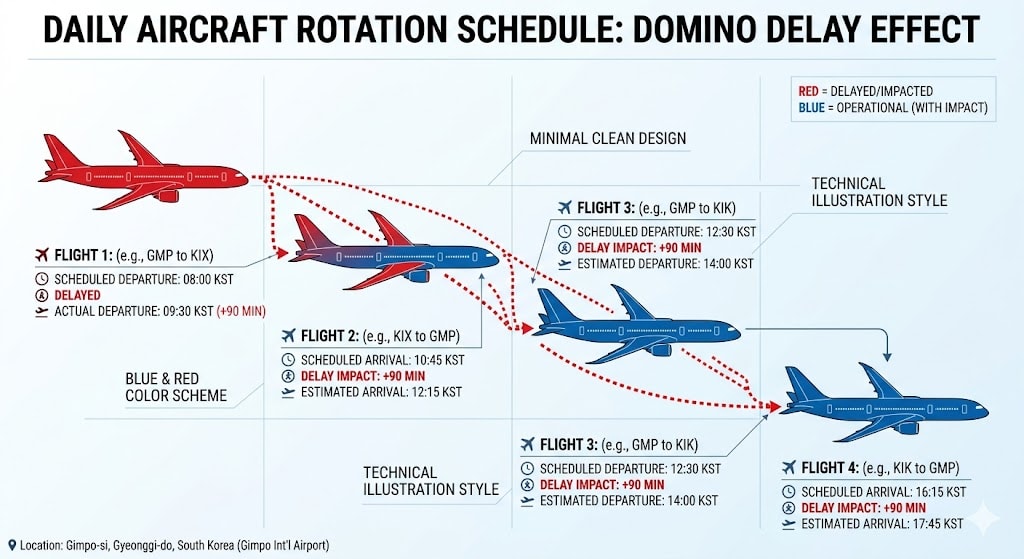
Here is how it works. A single narrow-body aircraft at a Korean LCC does not sit idle. A typical daily rotation might look like this:
06:00 Incheon → Osaka
09:30 Osaka → Incheon
12:30 Incheon → Da Nang
17:30 Da Nang → Incheon
21:00 Incheon → Fukuoka
23:30 Fukuoka → Incheon
That is six flights in one day, on the same aircraft, with turnaround times as short as 45 minutes between flights. Now imagine the 06:00 Incheon-Osaka departs 90 minutes late because of morning fog. The aircraft lands in Osaka 90 minutes behind schedule. The turnaround (deplaning, cleaning, refueling, boarding) takes its normal 45 minutes. So the Osaka-Incheon departure is now 90 minutes late too. And the Incheon-Da Nang? Also 90 minutes late. And so on, all day long, until the last flight of the day lands after midnight.
Every single passenger on those five subsequent flights is delayed because of fog in Incheon at 6 AM. The passenger on the 21:00 Fukuoka flight has no idea why their flight is delayed. The weather in both Incheon and Fukuoka is perfect. The airline’s app says “operational reasons.” But the real reason is fog, twelve hours ago, at a completely different time.
At a full-service carrier with a large fleet, this problem is manageable—they can swap in a spare aircraft. At a Korean LCC operating a tight fleet with high utilization, there are often no spare aircraft available. The delay simply propagates through the entire day’s schedule like a wave. This is why, as a general rule, morning flights are more likely to depart on time and evening flights are more likely to be delayed. The delays accumulate as the day progresses.
From my perspective in the OCC, managing the domino effect is a constant juggling act. I am always calculating: if this aircraft is running 45 minutes late, can we shorten the turnaround? Can we make up time en route with a faster cruise speed (which burns more fuel—everything is a trade-off)? If the delay is going to push past midnight, do the crew duty times still work? Often, the answer to that last question is no, which leads to the next category of delay.
3. Crew Duty Limits: When Your Pilots Legally Cannot Fly
Aviation has strict rules about how long pilots and cabin crew can work. These rules exist because fatigued crews make mistakes, and mistakes in aviation can be fatal. They are non-negotiable.
In Korea, as in most countries following ICAO standards, flight crew duty time limits are set by regulation. A pilot might have a maximum duty period of 10-14 hours depending on the report time and number of sectors. When delays push a flight past the crew’s legal duty limit, the flight cannot depart. Period. It does not matter that the aircraft is ready, the passengers are boarded, and the gate agent is pleading with the OCC. If the crew will exceed their legal duty time, the flight is either delayed until a fresh crew arrives or cancelled entirely.
I have been in this exact situation more times than I can count. The hardest version goes like this: a typhoon delays our morning flights out of Incheon by three hours. By afternoon, the weather clears and the aircraft are ready. But the crews who reported at 5 AM are now approaching their duty limits. They can fly one more sector—but the return flight would push them past the limit. So I have to make a choice: do I send the aircraft on the outbound sector and then have it sit at the destination overnight without a crew? Or do I cancel the outbound flight now and preserve the crew for tomorrow’s schedule?
Neither option makes passengers happy. But both are safer than putting a fatigued crew in the cockpit. This is a decision I take seriously every time, and it is one of the most common reasons behind the mysterious “operational reasons” delay code.
At a large airline with crew bases at multiple airports, they can call in a reserve crew. At a Korean LCC with a single crew base in Incheon (and sometimes Gimhae), there is no reserve crew sitting in Manila or Bangkok. If the crew times out at an outstation, the options narrow dramatically: find a crew to deadhead (fly as passengers) to the aircraft, or cancel and recover the next day.
4. Maintenance: The Delay You Should Be Grateful For
When a flight is delayed for maintenance, passengers groan. I understand the frustration. But if you knew what maintenance delays actually prevent, you would feel very differently about them.
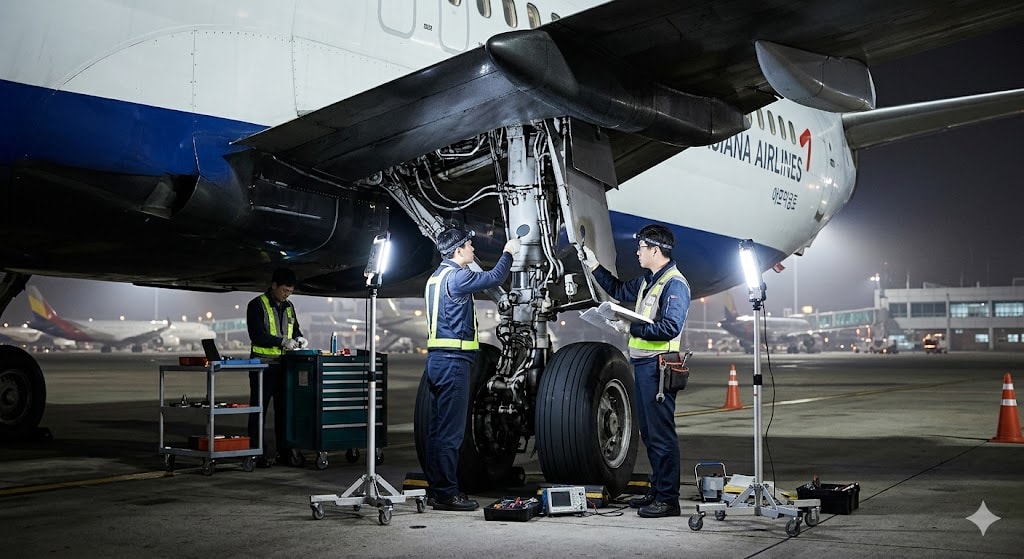
Maintenance delays fall into two categories:
Scheduled maintenance overruns. Aircraft undergo regular inspections—daily checks, weekly checks, and more extensive A/B/C/D checks at longer intervals. Sometimes a routine check reveals an issue that was not anticipated, requiring additional work. The aircraft returns to service later than planned, which delays all the flights assigned to it.
Unscheduled defects discovered before departure. During the pre-flight walk-around, the pilot or ground engineer might find something: a tire that needs replacing, a hydraulic leak, a navigation light that is out, a bird strike from the previous flight that needs inspection. Some defects can be deferred under the aircraft’s Minimum Equipment List (MEL)—meaning the aircraft can safely fly with the defect under certain conditions. Others cannot be deferred and must be fixed before departure.
I have dispatched flights where a maintenance issue was discovered during boarding. The engineer estimated a 45-minute repair. The passengers waited. The repair took 90 minutes because the part needed to be sourced from a different location. The flight departed two hours late. Was it frustrating? Absolutely. Was it the right call? Without question.
Here is a real scenario from my experience. We had an aircraft scheduled for a quick turnaround at a Southeast Asian outstation—let us say Manila. During the pre-flight check before the return to Incheon, the crew discovered a warning light issue with one of the bleed air systems. The MEL allowed dispatch with the system inoperative, but with restrictions: we needed to fly at a lower altitude, which increased fuel burn. The lower altitude also meant we could not carry the full passenger load because the fuel requirement increased. I had to quickly recalculate the entire flight plan, determine how many passengers we could carry, coordinate with the station to offload the excess, and re-brief the crew—all while 170 passengers were sitting in the terminal wondering why their flight was delayed.
We departed 75 minutes late with 12 fewer passengers (who were rebooked on the next day’s flight). Every single one of those 158 passengers who did fly arrived safely. That is what a maintenance delay looks like from inside the OCC.
5. Air Traffic Control: The Invisible Traffic Jam
Most passengers have a vague sense that air traffic control (ATC) exists, but few understand how directly ATC can cause delays.
The sky is not an infinite highway. Airways have capacity limits, just like roads. When too many aircraft are scheduled to arrive at an airport during the same window, ATC imposes flow control measures—essentially a metered rate of arrivals. If the airport can handle 40 landings per hour but 55 are scheduled, ATC will delay 15 of those flights at their departure airport. This is called a ground delay program (GDP), and it is why your flight might sit at the gate for 45 minutes with no apparent reason while the weather is clear.
In East Asia, this is particularly common at several airports we operate to regularly:
Tokyo Narita and Haneda are chronically congested. Slot availability is extremely tight, and if you miss your assigned slot by even a few minutes, you can wait an additional 30-60 minutes for the next available window. I have had flights ready to push back at Incheon, only to be held at the gate because Narita ATC pushed our arrival slot back by 40 minutes. We sit and wait—burning no fuel, confusing passengers—because departing on time would just mean holding in the air over Japan at a much higher cost.
Shanghai, Beijing, and Chinese airports in general frequently impose flow control restrictions, often on short notice. Military exercises can close entire sectors of airspace without warning, forcing re-routes that add 30-60 minutes to flight times. Chinese airspace management is significantly less flexible than Japanese or Southeast Asian airspace, and as a flight dispatcher, it is one of the most unpredictable variables I deal with.
Bangkok Suvarnabhumi during peak evening hours experiences arrival congestion that regularly adds 15-20 minutes of holding time. I build this into my fuel planning as a matter of routine for evening Bangkok flights.
6. Airport Operations: What Happens on the Ground Matters
Sometimes the delay has nothing to do with the aircraft, the weather, or the airspace. It is the airport itself.
Ground handling delays include late baggage loading, catering truck delays, refueling delays, and pushback tractor availability. At major airports like Incheon, these are usually well-managed. At smaller outstations in Southeast Asia, ground handling quality can vary significantly. I have seen flights delayed because the ground handler at a regional airport had only one set of air stairs and another aircraft was using them.
Airport infrastructure issues also cause delays. Runway closures for maintenance, taxiway congestion, gate unavailability—all of these can add 15-30 minutes that compound through the day’s schedule. During peak season at popular Japanese airports (Osaka Kansai during cherry blossom season, for example), gate availability becomes a real constraint. An arriving flight might have to wait on the taxiway for a gate to open, which delays the turnaround, which delays the next departure.
Immigration and customs backlogs at the destination can also have an indirect effect. If arriving passengers take 90 minutes to clear immigration (not uncommon at certain Southeast Asian airports during peak hours), the aircraft cannot begin its turnaround until the last passenger has deplaned and the cabin is cleared. This pushes the outbound departure behind schedule.
7. “Operational Reasons”: The Truth Behind the Most Hated Delay Code
If I had to pick the single most frustrating thing about airline delay communication, it would be this phrase. “Operational reasons” tells the passenger nothing. And yet, from the airline’s perspective, it is often the most accurate description available.
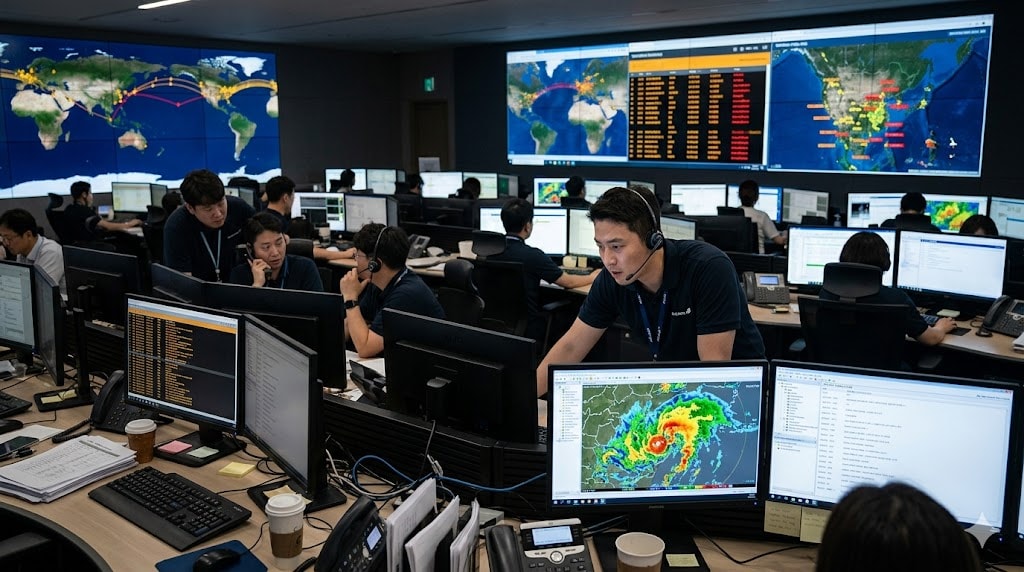
Here is why. A typical “operational reasons” delay is actually a combination of multiple factors intersecting simultaneously. Let me give you a real example:
A typhoon two days ago disrupted our network. We cancelled 8 flights and diverted 2 aircraft. During the recovery, one aircraft that was supposed to be in Incheon is actually sitting in Fukuoka, because that is where it diverted. We need to ferry it back (an empty flight with no passengers) before it can operate its scheduled service. But the crew that was supposed to fly today’s schedule was part of yesterday’s disrupted operation and exceeded their rest requirements—so they are not available until the afternoon. Meanwhile, the aircraft that was in Fukuoka had a bird strike during the diversion approach, and maintenance needs 4 hours to inspect and clear it.
So: the delay is caused by weather (the typhoon), maintenance (the bird strike inspection), crew (rest requirements), and aircraft positioning (wrong airport)—all at the same time. What code do you put on the departure board? “Operational reasons” is genuinely the most accurate description, because the real answer is “everything.”
I wish airlines were better at communicating this to passengers. A simple message like “Your flight is delayed because the aircraft needed for this service is currently being repositioned from another airport following yesterday’s typhoon disruption” would go a long way toward reducing passenger frustration. Some airlines are getting better at this. Many are not.
8. What LCC Passengers Need to Understand
I want to be honest about something that is specific to low-cost carriers, because that is where I work and I think passengers deserve the transparency.
LCCs are structurally more vulnerable to cascading delays than full-service carriers. Here is why:
Higher aircraft utilization. Our aircraft fly more hours per day than a full-service carrier’s fleet. That means tighter turnarounds, less buffer time between flights, and less room to absorb delays. A full-service carrier might schedule 90 minutes between flights; an LCC might schedule 45 minutes. The LCC saves money (more revenue flights per day), but the trade-off is less resilience when things go wrong.
Fewer spare aircraft. A major airline might have 5-10 spare aircraft available to substitute when one goes out of service. A Korean LCC with a fleet of 30-40 aircraft might have zero or one spare on any given day. When an aircraft goes down for maintenance, there is often no replacement available. The flights assigned to that aircraft get delayed or cancelled.
Single crew base. Most Korean LCCs base their crews primarily in Incheon, with perhaps a secondary base in Gimhae (Busan). There are no reserve crews stationed in Bangkok, Manila, or Tokyo. If a crew times out at an outstation, the recovery options are limited and time-consuming.
Limited interline agreements. If a full-service carrier cancels your flight, they might rebook you on a partner airline. LCCs typically do not have these agreements. If your LCC flight is cancelled, you are usually rebooked on the next available flight by the same airline—which might be tomorrow.
None of this means LCCs are less safe. The safety standards are identical. But the operational resilience—the ability to absorb disruptions and recover quickly—is objectively lower. This is the trade-off that enables a ₩50,000 fare to Osaka. Understanding this trade-off helps set realistic expectations.
9. What Can You Actually Do About It?
I cannot prevent all delays. But after 15 years of causing them (and managing them), here is my honest advice for minimizing the impact on your travels.

Book the first flight of the day. The aircraft has been sitting at the airport overnight. There is no previous flight to cascade a delay from. The crew is fresh. The weather has not had time to build. Morning flights have the highest on-time performance at virtually every airline.
Avoid connections with tight layovers on LCCs. If you are connecting through Incheon on two separate LCC bookings (say, Osaka → Incheon → Da Nang), leave at least 4-5 hours between flights. Remember, if the first flight delays and you miss the second, the airline has no obligation to rebook you because they are separate bookings. I have seen this catch passengers off guard many times.
Check your flight status before leaving for the airport. Most Korean airlines update their apps and websites with delay information 1-2 hours before departure. There is no point rushing to the airport if your flight is already showing a 3-hour delay.
Know your aircraft’s rotation. Flight tracking apps like Flightradar24 let you see where your aircraft currently is. If your aircraft is currently showing as delayed at its previous destination, your flight will almost certainly be delayed too—even if the airline has not officially announced it yet.
Be strategic about typhoon season travel. If you are flying to Okinawa, the Philippines, or Taiwan between July and October, build buffer days into your itinerary. Typhoons are not rare events—they are seasonal certainties. Having a flexible return date can save you enormous stress.
Travel insurance is not optional for international flights. Especially on LCCs without extensive rebooking options, a good travel insurance policy that covers delay-related expenses (hotel, meals, alternative flights) is worth every won.
10. A Dispatcher’s Perspective: We Do Not Want Your Flight Delayed Either
I want to end with something that I think gets lost in the frustration of delays.
No one in the airline wants your flight to be delayed. Not the gate agent. Not the pilot. And certainly not me.
Every delay costs the airline money—fuel for extended taxi times, overtime for crew, ground handling charges for late operations, compensation costs, rebooking expenses, and the intangible cost of losing a customer’s trust. The airline’s incentive is perfectly aligned with yours: get the flight out on time.
But there is a hierarchy that overrides everything else, and it goes like this: safety first, then legality, then schedule, then cost. We will never compromise the first two to achieve the last two. If that means your Osaka flight departs 90 minutes late because I needed to add extra fuel for forecasted turbulence and thunderstorms along the route, then it departs 90 minutes late. If the crew cannot legally fly, the flight does not go. If maintenance finds an issue, it gets fixed first.
After 15 years of making these decisions, I can tell you that the system is not perfect. Communication to passengers is often poor. Recovery from disruptions can be slow, especially at LCCs with lean operations. And yes, sometimes delays happen because of decisions that could have been managed better.
But the fundamental framework—the one that puts safety above schedule, every single time—works. The delay you are experiencing right now exists because someone in the system decided that your safety was more important than your departure time. And in my professional opinion, that is exactly the right priority.
Learn more about our mission and operational background on the About Aeruxo page.
Frequently Asked Questions
Why does the airline say “weather delay” when the weather at my airport is fine?
Weather delays are not just about the conditions at your departure airport. A storm at your destination, severe weather along the flight route, or bad weather at the airport where your aircraft is coming from can all delay your flight. Additionally, system-wide ATC flow control measures triggered by weather at major hub airports can affect flights at airports hundreds of miles away from the actual weather event.
Why are evening flights delayed more often than morning flights?
Because of the domino effect. An aircraft flies multiple routes per day. Any delay earlier in the day cascades forward through each subsequent flight. By evening, the accumulated delays from the entire day’s operations catch up. This is why booking the first flight of the day gives you the best chance of an on-time departure—there are no previous flights to cascade delays from.
Can I get compensation for a delayed flight on a Korean LCC?
Korean consumer protection regulations provide some protections for delayed flights, but they are not as comprehensive as EU261 regulations in Europe. Airlines must provide meals and accommodation for extended delays, and may offer rebooking or refunds for cancellations. However, compensation varies by airline and situation. Always check the specific airline’s conditions of carriage and Korean consumer protection guidelines.
Why do airlines overbook flights if delays and cancellations are already a problem?
Overbooking is actually a separate issue from delays. Airlines overbook because a predictable percentage of passengers do not show up for their flights (no-shows). If the airline sold exactly the number of seats available, those empty seats would represent lost revenue on every flight. Overbooking fills those seats. When it goes wrong (more passengers show up than expected), it creates a different type of delay. But most of the time, overbooking has no impact on departure time.
What does “slot restriction” mean as a delay reason?
A slot is a specific time window assigned by ATC for your flight to take off or land. At congested airports (Tokyo Narita, Shanghai Pudong, Bangkok Suvarnabhumi during peak hours), if you miss your assigned slot, you must wait for the next available one. This can add 20-60 minutes to your departure. The airline may show this as “ATC delay” or “slot restriction.” It means the airspace or airport is at capacity and flights are being metered to maintain safety.
Is there a way to predict if my flight will be delayed?
Not with certainty, but you can improve your odds. Check the weather at your departure, destination, and the aircraft’s previous station using a flight tracking app. Look at the on-time history for your specific flight number—some flights are chronically late due to their position in the daily schedule. And be especially cautious during typhoon season (June-November) for East and Southeast Asian destinations.
Have a question about flight delays or airline operations? Leave a comment below—I will answer from an operational perspective.
Disclaimer: The views expressed in this article are my own professional opinions based on 15+ years of operational experience. They do not represent the official position of any airline, aviation authority, or regulatory body. Specific airline details have been generalized to protect operational security.